September 27, 2026
Bitter or Better: Don’t Let Hurt Hinder God’s Work
Hebrews 12:14-15; Genesis 50:19-20; Romans 12:18-19; James 5:6
Drawing on Hebrews 12:14–15, the sermon warns that bitterness can take root beneath the surface, grow when we continually rehearse an offense, and trouble us and those around us. The preacher distinguishes the hurt or anger someone causes from the bitterness we allow to take hold within us.
Listeners are urged to notice resentment early, bring it to God, and choose forgiveness rather than revenge. Forgiveness does not mean the harm was acceptable, that trust is instantly restored, or that wise boundaries and consequences are unnecessary.
Joseph’s story illustrates how God can bring good even from what others intend for evil. The sermon calls the church to pursue peace, resist spreading resentment, and trust God to shape us through pain rather than let pain define us. Its closing question is whether we will rehearse an offense or release it to God.
Key takeaways
- Look diligently for bitterness before it takes root.
- Rehearsing an offense can deepen resentment.
- Remembering hurt is different from continually reliving it.
- Give anger and bitterness to God rather than seeking revenge.
- Forgiveness does not make wrongdoing acceptable.
- Forgiveness does not automatically restore trust or remove the need for boundaries.
- Do not recruit others into your resentment.
- Pursue peace as far as it depends on you.
- God can bring good from what others intend for evil.
- Your pain can be part of your story without writing its ending.
- Day 1Hebrews 12:14-15; Psalm 139:23-24
Look Beneath the Surface
Bitterness rarely appears all at once. Like a root beneath the soil, it can begin quietly: a hurt we keep turning over, an offense we assume we understand, or anger we have not brought before God. Hebrews urges us to look diligently, because what takes root in one heart can eventually trouble others too. This kind of attention is not an invitation to obsess over every hurt or accuse ourselves for feeling pain. It is a chance to ask God honestly what is growing within us. We may remember an offense without choosing to rehearse it. When the memory returns, we can bring it to the Lord rather than feeding resentment with imagined arguments and old verdicts. Ask God to open your eyes to your own heart, and to show you the next faithful step toward peace, forgiveness, or a wise boundary.
- Reflect
- What hurt or resentment might God be inviting you to notice honestly today?
- Prayer
- Lord, search my heart and help me see what is taking root within me.
- Day 2Hebrews 12:15; Ephesians 4:26-27, 31-32
Do Not Water the Root
Being hurt is real, and Scripture does not ask us to pretend that wrongdoing was harmless. But anger can become something we keep feeding when we replay the offense, rehearse what we wish we had said, or assume the worst about another person’s motives. The memory may arise without our choosing; what we do next matters. We can pause and bring the hurt to God instead of letting it govern our thoughts and actions. Ephesians calls us to put away bitterness and to forgive one another as God in Christ forgave us. Forgiveness does not mean instant trust, denial, or the removal of every consequence. It means we refuse to make revenge our purpose. Today, when resentment rises, name the hurt truthfully, ask God for help, and choose one action that does not feed the bitterness. Let the Lord tend to your heart, one moment at a time.
- Reflect
- When you remember an offense, what could help you respond without rehearsing it?
- Prayer
- God of grace, help me release resentment to you and choose a faithful response.
- Day 3Genesis 50:19-21; Romans 8:28
But God
Joseph did not call the evil done to him good. His brothers meant him harm, and he named that truth. Yet he could also see that their actions did not have the final word over his life: God had been at work to preserve many lives. Joseph’s story does not promise that every painful circumstance will quickly turn out as we hope. It does remind us that harm cannot place limits on God’s ability to work. When someone has wounded you, you may not yet see what God is doing, and you do not have to force a tidy explanation. You can entrust the unfinished story to him. “But God” is not a denial of pain; it is an expression of hope that God remains present and purposeful even in suffering. Ask him to keep the hurt from defining your whole story, and to show you how to walk faithfully today.
- Reflect
- Where do you need to trust that God can work even though the hurt remains real?
- Prayer
- Faithful God, meet me in what hurts and help me entrust my story to you.
- Day 4Hebrews 12:15; James 3:5-10
Do Not Spread the Hurt
Bitterness rarely stays private. It can shape our tone, color how we interpret others, and spill into conversations with people who were not part of the original hurt. Hebrews warns that a root of bitterness can trouble us and defile many. This is a call to care for our own hearts and for the people around us. Seeking wise counsel is good; recruiting others to take sides or repeating an offense to stir resentment is different. Before sharing, pause and ask whether your words are seeking healing, truth, and wise help—or simply spreading the wound. James reminds us that our words carry real power. We can tell the truth without turning people into a jury, and we can seek support without passing on contempt. Ask God for speech that is honest and gentle, and for the humility to protect others from a burden that is not theirs to carry.
- Reflect
- Do your words about a hurt invite wise help, or draw others into resentment?
- Prayer
- Lord, guide my words so they bring truth, care, and peace rather than spreading hurt.
- Day 5Hebrews 12:14; Romans 12:18-19
Follow the Way of Peace
“Follow peace with all” is a direction for our lives, not a promise that every relationship will become easy or safe. Romans wisely says, “if it be possible,” and “as much as lieth within you.” We cannot control another person’s choices, and pursuing peace does not require ignoring harm or abandoning necessary boundaries. We can, however, refuse to let the desire to win, punish, or prove ourselves right rule our hearts. Vengeance belongs to God; our calling is to act with integrity and seek peace where we can. Sometimes that means offering forgiveness. Sometimes it means a truthful conversation, a boundary, or support from a trusted person. Ask God for the next step, not necessarily the whole solution. Your pain is part of your story, but it need not write its ending. By grace, choose what leads toward peace today.
- Reflect
- What is one wise, peaceful step you can take without denying the hurt?
- Prayer
- Jesus, lead me in the next step toward peace, with truth, wisdom, and grace.
Open together
- 1.What helps you feel safe and comfortable sharing honestly in a group?
- 2.When you hear the word “bitterness,” what thoughts or images come to mind?
Observation
- 1.In Hebrews 12:14–15, what are believers urged to pursue?
- 2.What does the passage say we should watch for, and what may happen if a root of bitterness grows?
- 3.According to the sermon, how can bitterness begin beneath the surface and become more visible?
- 4.What contrast does the sermon draw between remembering an offense and rehearsing it?
- 5.How does Joseph respond to his brothers in Genesis 50:19–20?
- 6.What does the sermon say forgiveness does not necessarily mean?
Interpretation
- 1.What might it mean to “look diligently” for a root of bitterness in our lives?
- 2.How can bitterness trouble the person holding onto it, even when the person who caused the hurt has moved on?
- 3.Why does Hebrews warn that bitterness can affect “many” and not just one person?
- 4.How does Joseph’s story show both the reality of wrongdoing and God’s ability to bring good from painful circumstances?
- 5.How do the calls to pursue peace and holiness shape the way Christians should respond to conflict?
- 6.Why is forgiveness compatible with acknowledging harm, consequences, and the need for boundaries?
Application
- 1.Is there an offense you find yourself replaying or rehearsing? What might it look like to bring it honestly to God?
- 2.What could help you notice bitterness before it takes deeper root?
- 3.Is there a step toward peace, forgiveness, or a healthy boundary that you feel ready to take?
- 4.How can you seek wise counsel about a hurt without spreading resentment or recruiting others to take sides?
- 5.What might it mean in your situation to trust God with justice rather than trying to make someone pay?
- 6.Who could support you as you seek to release bitterness and respond with grace?
Stop Watering the Offense
0:51Remembering an offense is one thing—rehearsing it is how bitterness grows.
The Period That Starts a Fight
0:54A single “K” can trigger a whole story in your head—and a fight that never needed to happen.
Will You Rehearse It or Release It?
0:58You can’t control what someone did yesterday, but you can choose what you do with it today.
Bitterness Is Only Hurting You
0:38You may think you’re holding something against them, but you’re the one carrying the weight.
You’re the One Paying the Bill
0:39Trying to make someone else pay can cost you the present—and the future right in front of you.
Forgiveness Doesn’t Mean It Was Okay
0:51You can forgive someone without pretending the harm was acceptable.
Joseph Chose Grace Over Revenge
0:51Joseph had the power to punish his family—or save them, and he chose grace.
They Saw a Pit. God Saw a Palace.
0:55What looked like the end of Joseph’s story became the road to his next assignment.
Bitterness Changes Your Lens
0:43Bitterness can distort what you see—so ask God to open the eyes of your heart instead.
What They Did Doesn’t Decide Your Future
0:57What people did to you does not have the authority to decide what God can do through it.
Bitterness takes root when we let anger shape what happens inside us. Ask God to show you what you’re carrying and help you release it. Join us in choosing grace over bitterness.
#BitterOrBetter #VirginiaAvenueBaptistChurch #Faith #Forgiveness
Post it on Facebook
Then attach the saved picture and paste the caption into a new post.
A memory may come back, but rehearsing an offense can keep bitterness growing. When the hurt returns, ask God for help to release it rather than relive it. Share this reminder with someone who needs encouragement today.
#BitterOrBetter #VirginiaAvenueBaptistChurch #Grace #Forgiveness
Post it on Facebook
Then attach the saved picture and paste the caption into a new post.
Holding on to resentment can take us away from the present God has given us. Bring the hurt to God and ask for help to move forward. Join us in choosing peace today.
#BitterOrBetter #VirginiaAvenueBaptistChurch #ChoosePeace #Faith
Post it on Facebook
Then attach the saved picture and paste the caption into a new post.
What someone did to you does not limit what God can do through your life. Ask God to help you respond with faith and trust his work in your circumstances. Come reflect with us on Joseph’s story and God’s grace.
#BitterOrBetter #VirginiaAvenueBaptistChurch #Genesis5020 #GodIsAtWork
Post it on Facebook
Then attach the saved picture and paste the caption into a new post.
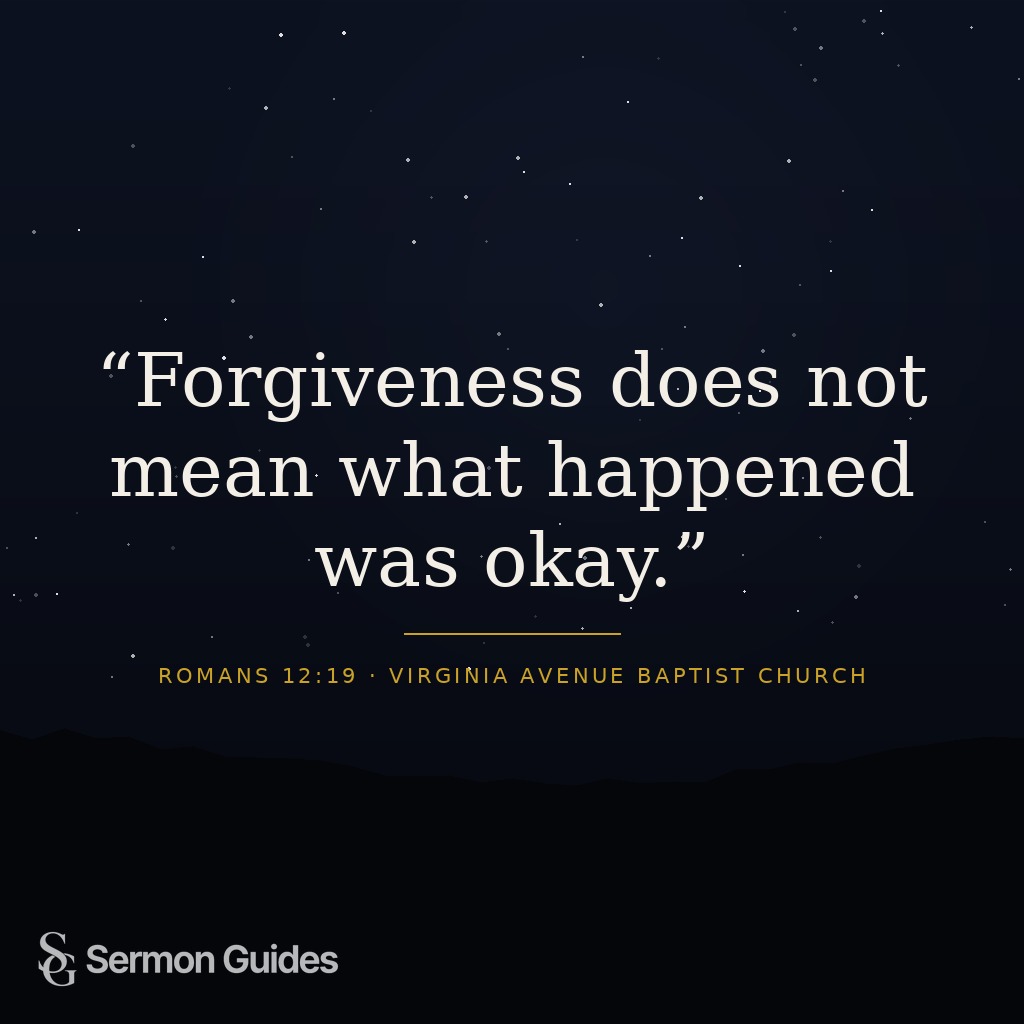
Forgiveness does not deny the hurt or erase the need for healthy boundaries. Ask God to help you release vengeance and take the next faithful step. Join us in seeking peace and forgiveness.
#BitterOrBetter #VirginiaAvenueBaptistChurch #Forgiveness #Romans1219
Post it on Facebook
Then attach the saved picture and paste the caption into a new post.

Pain may be part of your story, but it does not have to define where your story goes. Give God the hurt you’re carrying and trust him to lead you forward. Join us in choosing hope over bitterness.
#BitterOrBetter #VirginiaAvenueBaptistChurch #Hope #Faith
Post it on Facebook
Then attach the saved picture and paste the caption into a new post.