September 20, 2026
Prayers That Work
James 5:16-18; Acts 16:25-27; Proverbs
Preaching from James 5:16–18, the sermon teaches that prayer is more than religious words: it is communication with God that sustains faith and can bear fruit in our lives. The preacher emphasizes that Elijah was an ordinary person with human feelings and limits, yet he prayed earnestly and prayed again.
The sermon also points to Paul and Silas in prison in Acts 16. Though beaten and confined, they prayed and sang at midnight. Their worship did not depend on comfortable circumstances, and the earthquake that followed opened the prison doors and loosened the prisoners’ bonds.
The congregation is encouraged to keep praying and trusting God through delay, hardship, and uncertainty. Prayer may not change circumstances immediately, but it can sustain us within them and shape how we respond. The sermon closes with a call to renew one’s relationship with God through prayer, worship, and surrender.
Key takeaways
- Prayer helps keep faith rooted and active.
- Faithful prayer is more than religious vocabulary.
- Elijah had human limits, yet he prayed earnestly.
- When answers seem delayed, pray again.
- Prayer does not require perfect circumstances.
- Paul and Silas prayed and worshiped while imprisoned.
- Let worship express trust, not depend on comfort.
- Prayer may change how we endure before circumstances change.
- Do not let hardship silence your prayers.
- Return to God in prayer, trust, and surrender.
- Day 1James 5:16; Romans 12:3
Faith That Keeps Praying
Faith is more than agreeing that God is able; it is trusting him enough to keep turning toward him. James connects prayer with healing and calls the prayers of the righteous powerful. This does not mean prayer is a technique that guarantees the outcome we want. It means we bring our real needs to God, depend on his wisdom, and remain rooted in him as we wait. Works do not earn our place with God, but living faith bears fruit in faithful action—including prayer. When prayer has grown quiet, we can begin again with honesty rather than shame. God welcomes his children to draw near. Tell him what is heavy, ask for help, and listen for the grace to take the next faithful step. A steady prayer life does not make us powerful on our own; it keeps our lives turned toward the God who is faithful.
- Reflect
- What might help you turn toward God in prayer today, even if your circumstances have not changed?
- Prayer
- Faithful God, renew my trust and teach me to keep coming to you in prayer.
- Day 2James 5:17–18; Genesis 32:26
Pray Again
James reminds us that Elijah was human, with limitations like ours, and yet he prayed earnestly. The passage tells of his prayer and of his praying again; it invites us to persevere, not to imagine that we can control God by repeating the right words. Sometimes we pray and still wait. Waiting can be difficult, especially when we long for a clear answer. But prayer is not only a request for changed circumstances; it is also communion with God. In prayer, we bring our desires, fears, and questions into his presence and learn to trust his care. If you have been disappointed or unsure how to begin, you can pray again—simply, honestly, and without pretending. God is not a vending machine, and we are not required to force a result. We are invited to keep seeking the Lord, whose wisdom and timing are trustworthy.
- Reflect
- Is there a prayer you have stopped bringing to God, and what would it mean to entrust it to him again?
- Prayer
- Lord, help me persevere in prayer while trusting your wisdom and timing.
- Day 3Acts 16:22–25; Psalm 34:1
Prayer in the Midnight Hour
Paul and Silas prayed and sang hymns while imprisoned, wounded, and unable to see what would happen next. Their worship did not deny the pain or make their situation easy; it expressed trust in God in the middle of it. We, too, can bring our sorrow and uncertainty to God without pretending that everything is fine. Prayer may not change a circumstance immediately, but it can shape how we meet that circumstance: with honesty, courage, and hope grounded in God’s presence. The jail scene also reminds us that our faith is not meant to be hidden away. Others heard Paul and Silas, and their witness became part of a larger story of God’s work. When darkness feels close, a whispered prayer or a song can be a faithful response—not a guarantee of a sudden rescue, but a way of turning toward God who remains near.
- Reflect
- What honest prayer or song could help you turn toward God in a difficult moment?
- Prayer
- God of mercy, meet me in the dark and help me trust you without hiding my pain.
- Day 4Acts 16:26–34; 1 Thessalonians 5:16–18
A Witness Others Can Hear
When Paul and Silas prayed and sang, the other prisoners heard them. Their response to suffering was not a performance; it was a visible witness that their hope rested in God. The earthquake that followed led to a remarkable moment, but the passage does not teach that every hardship will end in the way or timing we desire. Instead, it shows that God can work in unexpected ways and that our faithfulness may affect people around us. The jailer and his household encountered the message of Jesus through what unfolded that night. Our prayers, words, and conduct can also encourage others, especially when life is hard. We do not need to force a cheerful appearance or carry every burden alone. We can seek support, pray with others, and let our hope point beyond ourselves to Christ.
- Reflect
- How might your response to difficulty offer a gentle, truthful witness to someone near you?
- Prayer
- Jesus, let my life reflect your hope and make me attentive to those who need encouragement.
- Day 5Psalm 34:1; Matthew 6:9–13
Keep Your Voice Open
The sermon’s closing encouragement is to keep praying and praising, even when we feel constrained. Scripture gives us many ways to pray: praise, confession, requests, lament, and thanksgiving. We do not need special words to impress God or need to beg as though he were reluctant to care for us. Jesus teaches us to call God our Father and to ask for daily provision, forgiveness, and deliverance. Prayer is a relationship of dependence, not a way to command God or guarantee a particular outcome. If you feel worn down, begin with one honest sentence. If words are difficult, sit quietly with a psalm or ask someone you trust to pray with you. God’s care does not depend on how forceful or polished your prayer sounds. Keep bringing your whole life to him, and let praise, when it comes, grow from trust rather than pressure.
- Reflect
- What simple practice could help you make room for honest prayer in your daily life?
- Prayer
- Father, draw me near, provide what I need, and help me trust your care each day.
Open together
- 1.What helps you feel comfortable sharing honestly in a small group?
- 2.When have you found it helpful to talk with someone you trust during a difficult season?
- 3.What comes to mind when you hear the phrase “prayer that works”?
Observation
- 1.In James 5:16–18, what does James encourage believers to do for one another?
- 2.What does James say about the prayer of a righteous person?
- 3.How does James describe Elijah, and what does Elijah pray for?
- 4.What happens after Elijah prays that it might not rain, and after he prays again?
- 5.In Acts 16:25–26, what are Paul and Silas doing at midnight, and what happens next?
- 6.According to Acts 16:27–34, how do the jailer and his household respond to what happens in the prison?
Interpretation
- 1.Why might James emphasize that Elijah was a person with human limitations like ours?
- 2.What does the account of Elijah teach about persistent prayer and God’s response?
- 3.How do prayer and praise shape Paul and Silas’s response to suffering in Acts 16?
- 4.What might the story show about how faithfulness can affect people beyond the ones who are praying?
- 5.How can we understand the sermon’s claim that prayer may change us while we are still in a difficult situation?
- 6.What does it mean to trust God in prayer without assuming that every request will be answered immediately or in the way we expect?
Application
- 1.What is one step you could take this week to make prayer a more regular part of your life?
- 2.When you face uncertainty or disappointment, what makes it difficult to pray?
- 3.Who could you pray with or for this week, and how might you encourage them?
- 4.How can you bring honest feelings—such as fear, weariness, or frustration—into prayer?
- 5.What might it look like to praise God in a difficult season while still being honest about your circumstances?
- 6.What is one situation you can entrust to God in prayer, while remaining open to his timing and direction?
Let Your Worship Set the Atmosphere
1:00Don't let your circumstances determine your worship—let your worship change the atmosphere around you.
God Is Not a Microwavable God
0:58Prayer isn't a button you press to get an instant fix; it reminds you that God is bigger than the problem.
Praise Before the Breakthrough
0:48Paul and Silas prayed in prison—and then, suddenly, the doors opened and their chains fell away.
When You Can't Fix It, Pray
0:48When the door is closed or life brings devastating news, prayer still works.
Can You Pray While You're Hurting?
0:51The real test is whether you can still pray when the answer hasn't come and you don't understand what God is doing.
Prayer Changes You in the Middle
1:00Prayer may not change your situation right away, but it can change what happens while you're in it.
Praise Before You See the Answer
0:33Faith doesn't require you to see the answer before you praise the one who can give it.
Prayer Moves More Than You Think
0:33Prayer is more than a request—it creates movement in the spirit and consequences in the natural.
Thank God for Midnight
0:46Midnight carries yesterday's darkness, but it also means a new day has begun.
God Is With You in the Dark
0:35A dark, lonely season doesn't mean you're without God's presence—it may be where you meet Him most clearly.
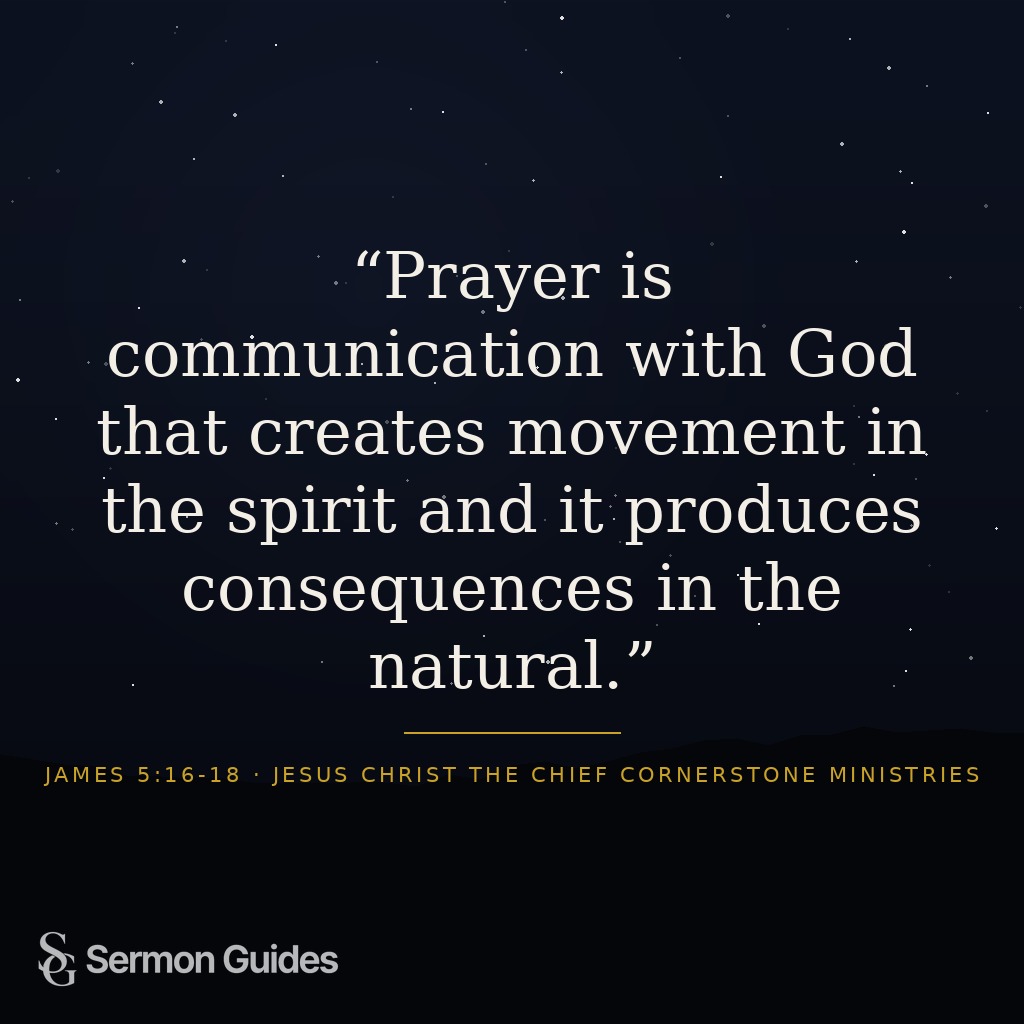
Prayer is more than words; it connects us with God and moves us forward. Make room for honest, consistent conversation with God today. What are you bringing to prayer?
#PrayersThatWork #JesusChristTheChiefCornerstoneMinistries #Prayer #Faith
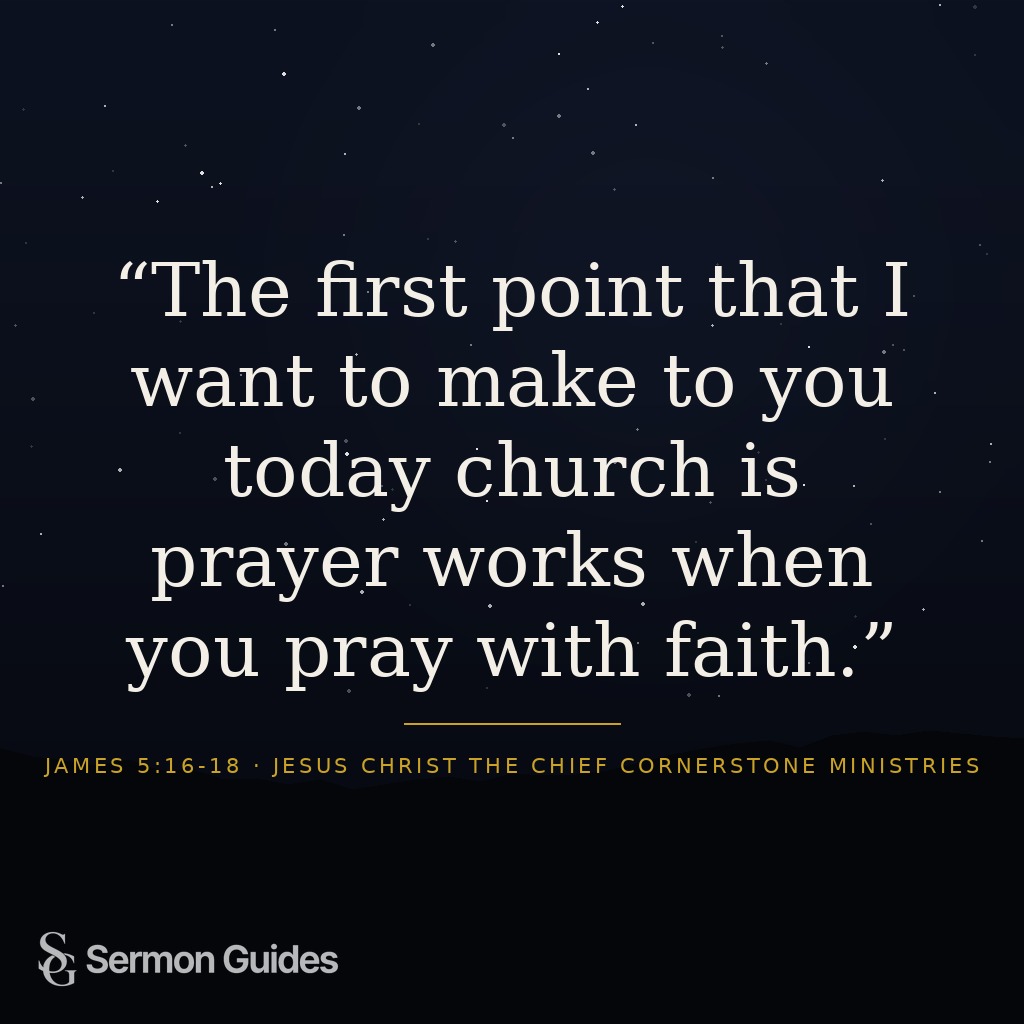
Faith and prayer belong together. Bring your needs to God with trust, even when you cannot yet see the outcome. Take a moment to pray with faith today.
#PrayersThatWork #JesusChristTheChiefCornerstoneMinistries #Faith #PrayerWorks
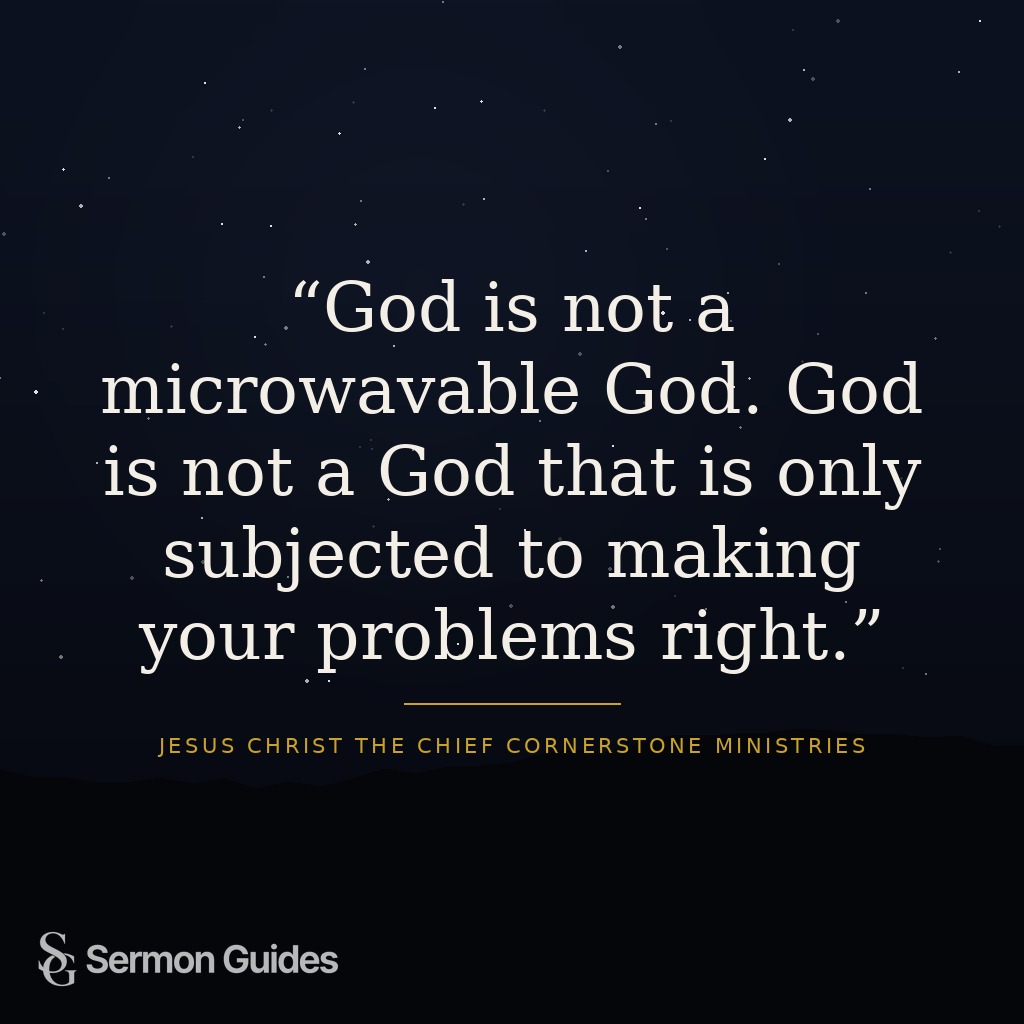
God is more than a quick fix for a difficult moment. Let prayer draw you into God’s presence, even while you wait for an answer. Spend a few minutes with God today.
#PrayersThatWork #JesusChristTheChiefCornerstoneMinistries #GodsPresence #Prayer
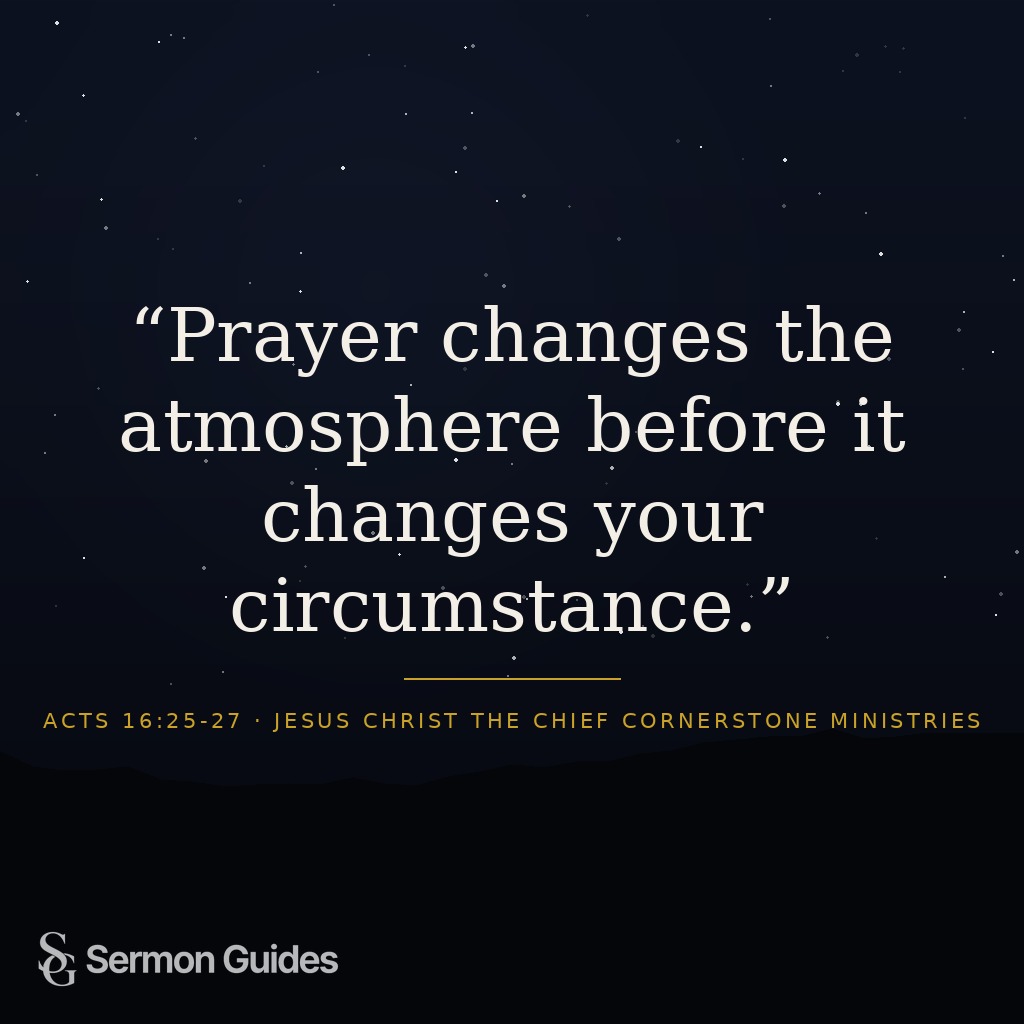
Prayer and praise can shape how we meet a difficult circumstance. Keep turning to God, even before anything around you changes. What would it look like to pray through this moment?
#PrayersThatWork #JesusChristTheChiefCornerstoneMinistries #Acts16 #PrayerAndPraise

Your circumstances do not get the final word about God’s worthiness. Keep worshiping and trusting God in the middle of what you face. Share this reminder with someone who needs encouragement today.
#PrayersThatWork #JesusChristTheChiefCornerstoneMinistries #Worship #TrustGod
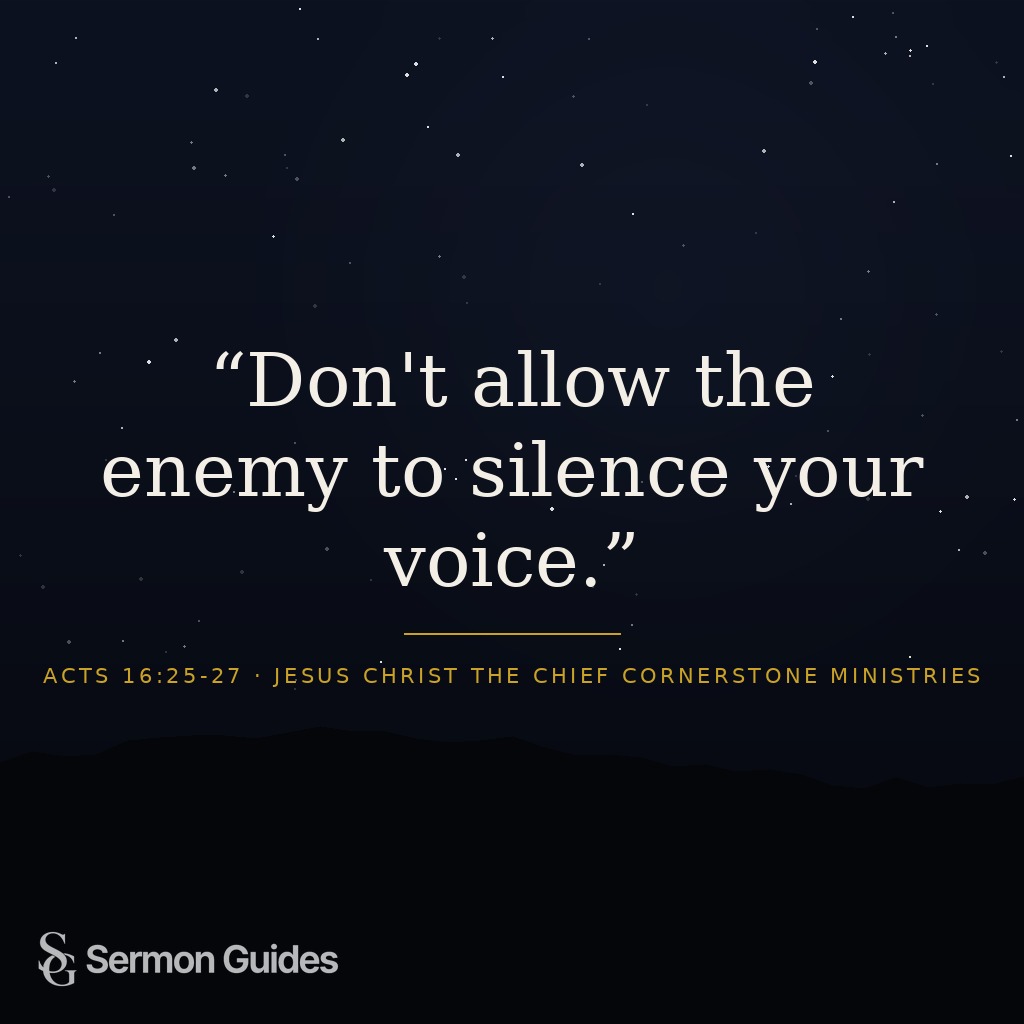
The sermon reminds us not to give up prayer and praise when life gets hard. Keep calling on God and encouraging those around you. Will you lift your voice in prayer today?
#PrayersThatWork #JesusChristTheChiefCornerstoneMinistries #PrayerWorks #Praise