August 5, 2026
The Book of Haggai
Haggai 2:10-19
In this study of Haggai 2:10-19, we explore the vital distinction between external religious activity and true heart holiness. The prophet Haggai uses priestly rulings on cleanness and uncleanness to illustrate that holiness is not something we 'catch' by simply being around sacred things or performing religious duties. Instead, sin and disobedience have a way of contaminating everything we do. At Oak Street Baptist Church, we are reminded that God is far more concerned with the posture of our hearts than the mere actions of our hands. Just as the Israelites found that building the temple walls wasn't enough without a changed heart, we must recognize that our justification comes through faith and grace, not through the works of the law or church attendance.
The passage also calls us to remember where God has brought us from, specifically highlighting the seasons of divine discipline. God reminds the Israelites of the frustrations they faced—meager harvests and failed efforts—because they had neglected His house to focus on their own. This discipline was not meant to be purely punitive but served as an invitation to repent and return to the Lord. We learn that trials and tribulations are often God's way of redirecting our gaze back to Him. Heartbreakingly, the Israelites initially resisted this call, proving that even clear discipline requires a responsive heart to lead to change. As believers, we are called to a lifestyle of repentance, constantly turning away from self-sufficiency and back to the mercy and kindness of our Heavenly Father.
Finally, Haggai presents a powerful lesson on trusting God despite our current circumstances. God promised to bless the people 'from this day on,' even though their barns were still empty and their vines had not yet produced fruit. This requires a faith that trusts the character of God over the evidence of our eyes. We are encouraged to seek first the kingdom of God, trusting that He is in ultimate control of our provision and protection. Like the birds of the air mentioned in Matthew 6, we are valuable to our Creator, who promises that obedience leads to blessing. Even when we are stuck in a rut or facing a 'wasteland,' we are called to keep our eyes on the God who is bigger than our circumstances and faithful to His word.
Key takeaways
- External religious activities like tithing or church attendance do not make us holy; true holiness comes from active obedience and a heart right with God.
- Sin and disobedience spread more easily than holiness, meaning we must be vigilant about our heart posture and the company we keep.
- God’s discipline and the frustrations we face in life are often divine invitations to repent and realign our priorities with His kingdom.
- We are called to trust God’s promises of blessing even when our 'barns are empty' and there is no physical evidence of change yet.
- Obedience to God is directly correlated to His blessing; seeking His kingdom first ensures that our needs will be met according to His plan.
- Day 1Haggai 2:10-14; Numbers 19:11-22
The Contagion of Sin
In Haggai 2:10-14, the prophet uses a priestly ruling to illustrate a profound spiritual reality: holiness is not contagious, but sin is. Carrying a piece of holy meat doesn’t make your whole garment holy, but touching something unclean immediately spreads that defilement. At Oak Street Baptist Church, we are reminded that external religious activities—like attending Wednesday night meals or tithing—do not automatically make us holy. Holiness isn't something you 'catch' by being in the building; it is a pursuit of active obedience. We often think that by being near 'holy things,' we are protected, but the heart is what matters. If our hearts are far from God, our religious activities can actually be contaminated by our disobedience. Today, reflect on your spiritual 'contagion.' Are you relying on church attendance to make you right with God, or are you actively pursuing a relationship with Him? God desires a heart that is fully submitted to His word rather than just a body that is present in a pew.
- Reflect
- In what ways have you relied on religious activities to feel 'holy' instead of seeking a genuine heart change?
- Prayer
- Lord, search my heart today. Forgive me for relying on outward rituals rather than inward transformation. Help me to pursue true holiness through obedience to Your Word. Amen.
- Day 2Haggai 2:15-17; Deuteronomy 28:15-24
Lessons in the Lack
The Israelites had been back from exile for sixteen years, yet the temple remained a mere foundation while they focused on their own paneled houses. In Haggai 2:15-17, God tells the people to 'consider' their past. He reminds them of a time when their efforts were frustrated: they expected twenty measures of grain but found ten; they sought fifty measures of wine but found twenty. This wasn't bad luck; it was divine discipline. God struck their work with scorching winds and mildew because their priorities were misplaced. Sometimes, the 'ruts' we find ourselves in are actually invitations from God to look up. He allows our self-centered efforts to fail so that we will realize our need for Him. When everything you touch seems to fall apart, it may be God calling you to evaluate your priorities. Are you building your own kingdom while the work of God’s kingdom lies desolate? Remember where He brought you from and recognize His hand even in the difficult seasons of discipline.
- Reflect
- When you face frustration in your work or home, do you stop to ask if God is trying to redirect your priorities?
- Prayer
- Heavenly Father, thank You for the discipline that draws me back to You. Help me to recognize Your hand in my circumstances and to prioritize Your kingdom above my own comfort. Amen.
- Day 3Romans 2:4; 2 Corinthians 7:10
The Heart of Repentance
The end of Haggai 2:17 contains a heartbreaking phrase: 'Yet you did not come back to me.' Despite the lack of grain, the failed harvests, and the clear signs of God’s discipline, the people remained stubborn. This highlights a vital truth: God’s discipline is not meant to crush us, but to lead us to repentance. As we learned from Romans 2:4, it is the kindness and patience of God that is intended to lead us back to Him. Repentance is not just a one-time event at salvation; it is a daily rhythm of the Christian walk. If you don't like saying 'I'm sorry' or 'I was wrong,' the Christian life will be a struggle, because we are constantly called to turn back to the Father. God is more concerned with the posture of your heart than the perfection of your actions. He wants you to return to Him, not just to your duties. Today, consider if there is an area of your life where you have ignored God’s call to turn back. Repentance is the doorway to renewed blessing.
- Reflect
- Is there a specific area of your life where you have felt 'scorching wind' lately? How might God be calling you to repent in that area?
- Prayer
- Lord, give me a soft heart that is quick to repent. Thank You for Your patience and for always providing a way for me to return to Your presence. Amen.
- Day 4Haggai 2:18-19; Hebrews 11:1-6
Trusting Before the Harvest
In Haggai 2:18-19, God gives a specific date and asks a piercing question: 'Is the seed still in the barn?' At that moment, the vines and trees had not yet produced fruit. Visually, nothing had changed. The people were still looking at empty storehouses and bare branches. Yet, God makes a bold promise: 'From this day on, I will bless you.' This is the essence of faith—trusting God before the evidence appears. We often want the blessing first so we can feel comfortable obeying, but God calls us to obey so that He can bless. The Israelites were called to trust God’s word while their circumstances still looked like a wasteland. Are you waiting for your situation to improve before you commit to being obedient? God invites you to trust Him in the middle of the 'empty barn' season. He is the God who commands the harvest, and His promises are more reliable than what we see with our physical eyes. Trust Him today, even if the fruit hasn't appeared yet.
- Reflect
- What 'empty barn' are you currently facing that requires you to trust God’s promise before you see the result?
- Prayer
- Father, help me to trust You even when my 'barn' is empty. Give me the faith to be obedient today, believing that You are faithful to Your promises. Amen.
- Day 5Matthew 6:25-34; Proverbs 3:5-6
Seeking the Kingdom First
The sermon at Oak Street Baptist Church closed with a powerful reminder from Matthew 6:33: 'Seek ye first the kingdom of God.' Haggai’s message to the returned exiles was that building the temple was important, but the heart behind the work was what truly mattered. God is in ultimate control of our provision and protection. As the verse on our church shirts reminds us, if God feeds the birds of the sky who do not sow or reap, how much more will He care for us, who are created in His image? The key to experiencing God’s peace and blessing is not working harder to secure our own future, but leaning entirely on Him. When we stop leaning on our own understanding and start seeking His righteousness first, the 'other things' begin to fall into place. Obedience is the direct correlation to blessing. As you go about your day, ask yourself: 'Am I seeking the Kingdom first, or am I trying to add God to my own kingdom?' Trust in the God who is bigger than your circumstances.
- Reflect
- How would your daily stress change if you truly believed God was in ultimate control of your provision?
- Prayer
- Lord, I choose to seek Your kingdom first today. Thank You for being a provider who cares for me more than the birds of the air. I trust Your plan for my life. Amen.
Open together
- 1.Have you ever spent a lot of time making the outside of something look great (like a house or a car) while ignoring a major problem on the inside?
- 2.When you hear the word 'holiness,' what is the first image or action that comes to your mind?
- 3.Have you ever experienced a season where it felt like 'everything you touched failed'? How did you react to that frustration?
Observation
- 1.According to verses 11-13, does holiness spread by contact? Does uncleanness spread by contact?
- 2.What specific agricultural disasters did God use to strike the work of the people's hands in verse 17?
- 3.In verse 16, what were the specific ratios of expected harvest versus actual harvest (grain and wine)?
- 4.What is the specific date mentioned at the beginning of this prophecy in verse 10?
Interpretation
- 1.Why does Haggai use the example of 'holy meat' and 'unclean corpses' to explain the people's spiritual state to the priests?
- 2.In verse 17, God says He struck them with scorching wind and mildew. What was the intended purpose of this discipline, and why was the result ('yet you did not come back to me') so tragic?
- 3.What is the significance of God promising blessing in verse 19 *before* the seed was out of the barn or the vine had produced fruit?
- 4.How does the phrase 'consider from this day onward' function as a turning point in the relationship between God and His people?
Application
- 1.Is there a 'temple' in your life (a spiritual priority) that has been left as just a foundation while you work on your 'own house'? How can you restart that work this week?
- 2.Identify one area where you have been 'leaning on your own understanding.' What is one practical step of obedience you can take in that area today?
- 3.How can we as a church community help one another stay focused on 'heart holiness' rather than just 'religious activity'?
- 4.In times of lack, do you tend to work harder or pray more? How does Haggai's message challenge that tendency?
Memory verse
“But seek first the kingdom of God and his righteousness, and all these things will be added to you.”
Matthew 6:33
You Don't Become Holy by Attending Church
0:35Sin spreads faster than holiness — real holiness comes from obeying God's Word.
Stop Trying to Work Your Way to Heaven
0:30Kingdom work is good, but it's your pursuit of God that makes you holy.
Are You Being Obedient to the Lord?
0:31Waiting on God's blessing? Haggai asks when you last obeyed Him.
Look at the God Bigger Than Your Circumstances
0:30The barn may be empty and the vine bare — keep your eyes on the Lord.
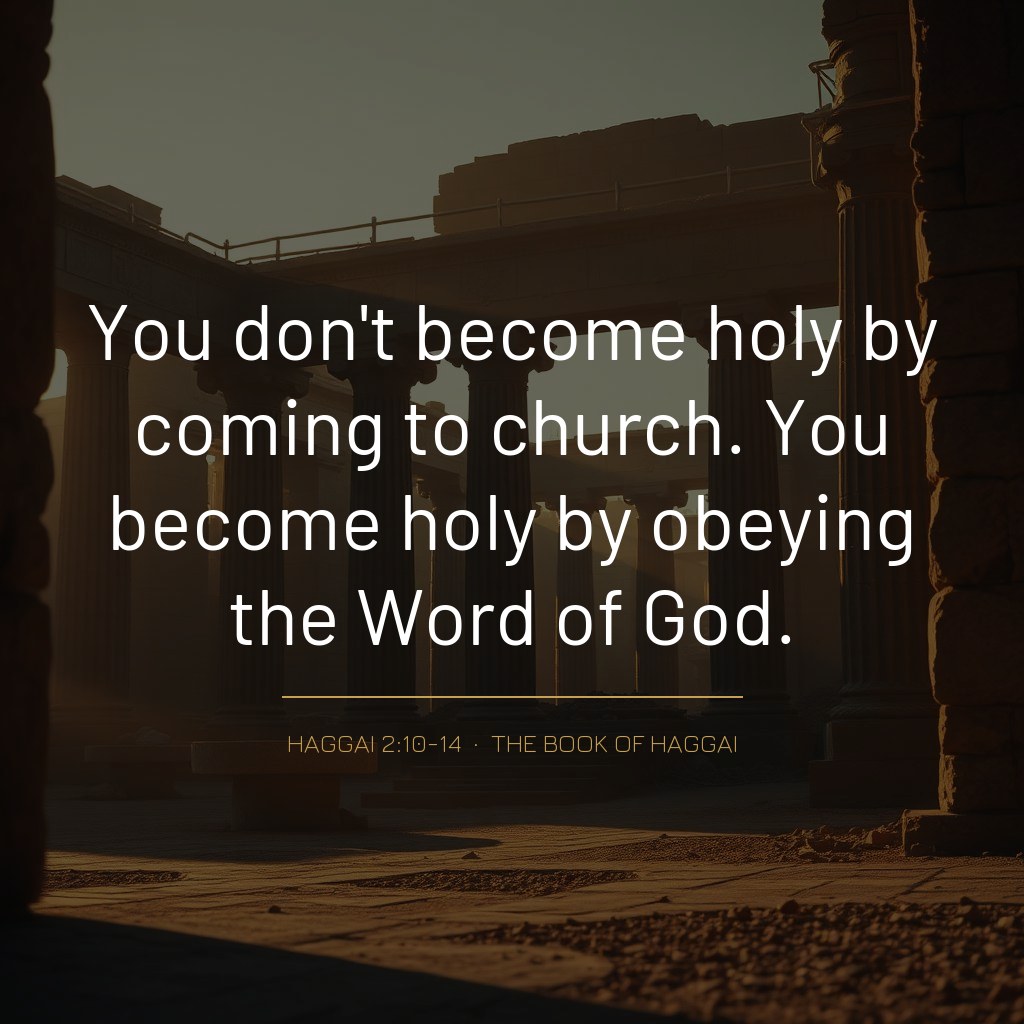
Holiness isn't something you catch by being in the building. You don't become holy by attending, tithing, or serving — you become holy by actively obeying the Word of God. — The Book of Haggai | Haggai 2:10-14
#Holiness #Haggai2 #OakStreetBaptistChurch #SundaySermon
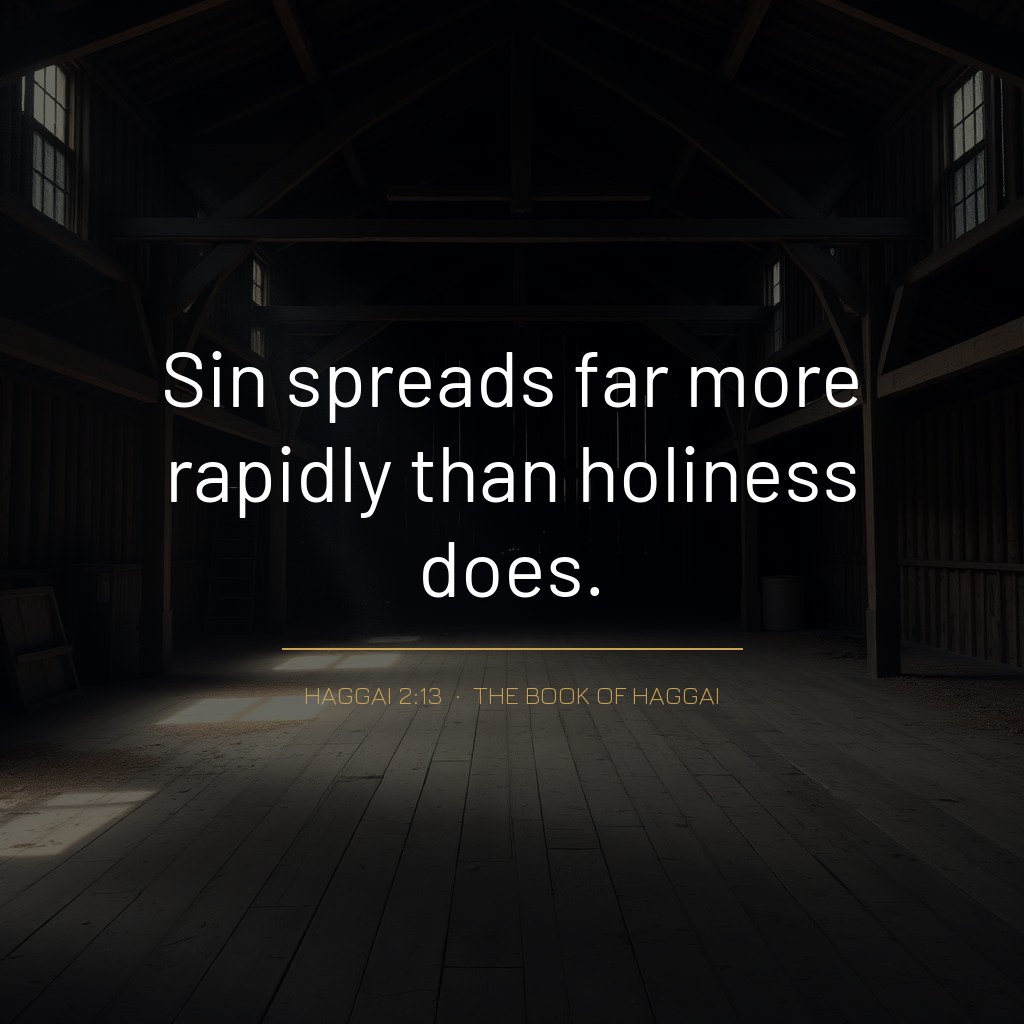
Haggai's priests learned it the hard way: holiness doesn't rub off, but defilement spreads on contact. Guard your heart and watch what you let close. — The Book of Haggai | Haggai 2:13
#GuardYourHeart #Haggai213 #OakStreetBaptistChurch #BibleStudy
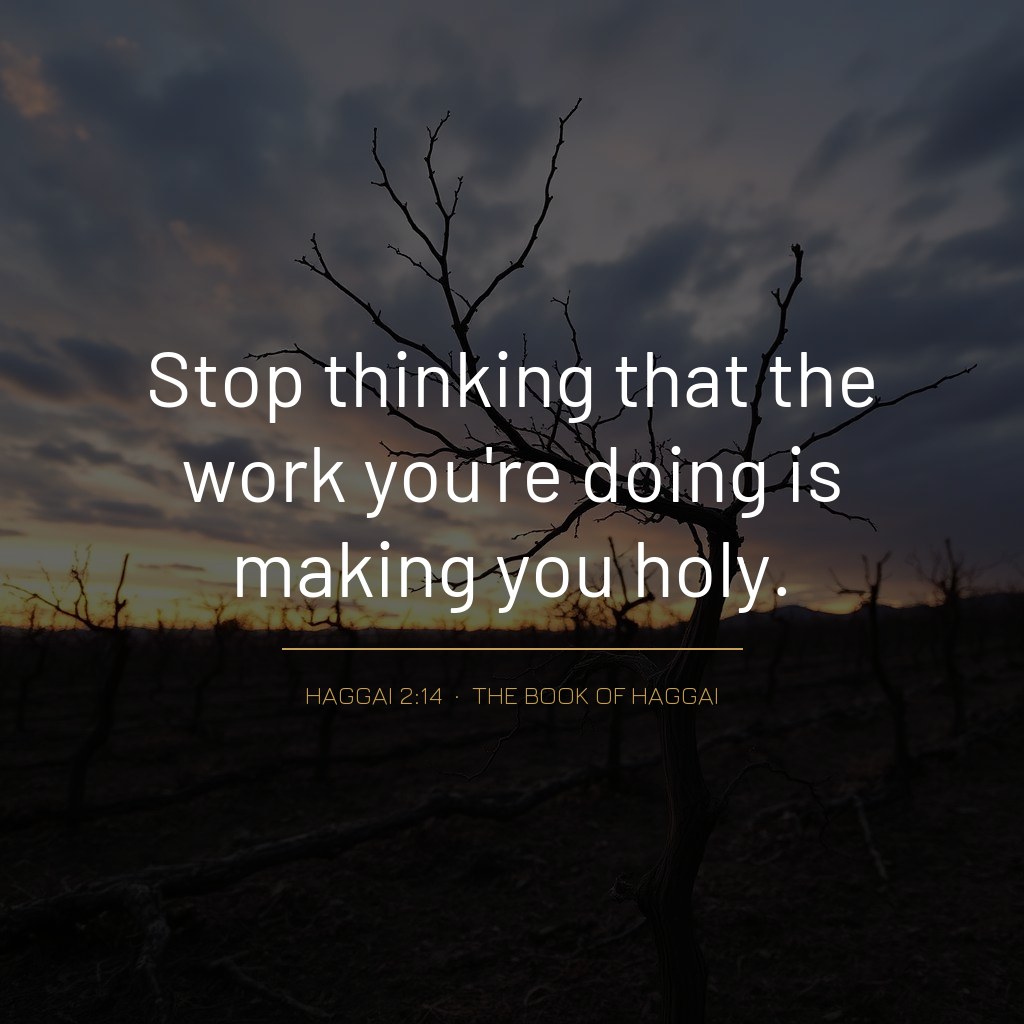
Don't hear what we're not saying — keep working for the kingdom. Just stop believing the work is what makes you holy. Your pursuit of God does. — The Book of Haggai | Haggai 2:14
#GraceNotWorks #Haggai214 #OakStreetBaptistChurch #FaithOverWorks
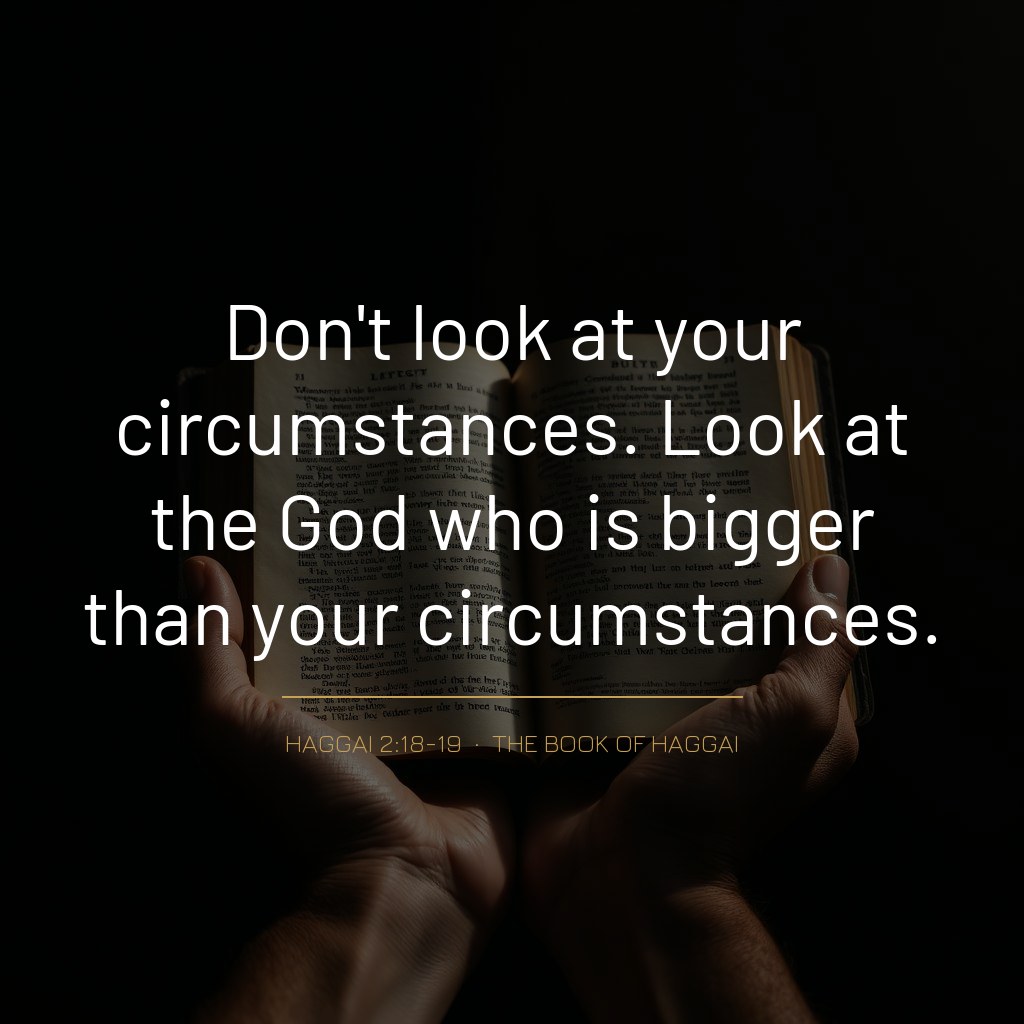
The barn may be empty and the vine bare, but God says, 'From this day on I will bless you.' Trust His character over the evidence of your eyes. — The Book of Haggai | Haggai 2:18-19
#TrustGod #Haggai219 #OakStreetBaptistChurch #FaithOverCircumstances