September 20, 2026
When Grace Refuses to Balance the Books
Matthew 20:1-16; Exodus (passage not specified)
Matthew 20’s parable of the vineyard workers tells of a landowner who pays the same generous wage to everyone, whether they worked all day or only an hour. The first workers’ frustration makes sense by ordinary standards, but the landowner’s generosity reveals the surprising character of God’s kingdom: grace is not a reward earned by keeping score.
The sermon contrasts human calculations of fairness and entitlement with God’s extravagant mercy. God’s generosity can unsettle us, especially when others receive good things we feel they have not earned. Yet the parable invites us to trust God’s goodness and rejoice in grace rather than resent it.
Reflecting on older adults in the church, the sermon encourages a life shaped by gratitude rather than comparison. Like the Israelites receiving daily manna, we receive what we need as a gift, not as something we can claim or stockpile. The sermon calls the congregation to celebrate God’s goodness for ourselves and for others, and to give thanks in all our work and circumstances.
Key takeaways
- God’s kingdom runs on generosity, not human scorekeeping.
- Grace is a gift, not a wage we earn.
- God’s goodness may challenge our sense of fairness.
- Receiving grace means making room for others to receive it too.
- Resentment grows when we focus on what we think we deserve.
- Gratitude turns our attention toward the gifts we already have.
- Like manna, daily provision invites trust rather than hoarding.
- A faithful life celebrates good things for others as well as ourselves.
- Older adults can leave a legacy shaped by grace and gratitude.
- Give thanks to God in every season and in our common work.
- Day 1Matthew 20:1-16
Grace That Upsets the Math
Jesus’ vineyard story is meant to surprise us. The workers who labored all day received the wage they had agreed to, yet they grumbled when those who worked only an hour received the same. Their protest makes sense by ordinary calculations: more hours should mean more pay. But the landowner’s generosity reveals a different kind of abundance. The parable does not tell us to ignore injustice in everyday life; it invites us to notice that God’s kingdom is not a reward system in which we earn God’s love by doing more than someone else. We receive life with God as a gift. Grace can feel unsettling when we compare ourselves with others, but it is good news for every one of us. We do not have to compete for God’s kindness. We can rejoice when another person receives a gift, trusting that God’s generosity is not running out.
- Reflect
- Where do you find yourself comparing what you receive with what someone else receives?
- Prayer
- Generous God, free me from comparison and teach me to rejoice in your grace. Amen.
- Day 2Exodus 16:13-21; Matthew 6:11
Enough for Today
In the wilderness, God gave the Israelites manna for each day. They could not turn the gift into a private stockpile; they had to receive what God provided and trust again tomorrow. Jesus later taught his followers to pray for “daily bread,” a simple request that acknowledges both need and dependence. This kind of trust can be difficult. We want to secure the future, hold tightly to what we have, and make sure our efforts guarantee a comfortable life. Planning can be wise, but no plan makes us the source of every good thing. The manna story reminds us that life is sustained by gifts we did not create: food, care, strength, and the people who walk beside us. Today, notice one provision you might usually take for granted. Receive it with gratitude, and ask God to help you trust him with what you cannot control.
- Reflect
- What is one daily gift you can receive with gratitude instead of treating it as something owed?
- Prayer
- God who provides, give me what I need for today and a trusting heart for tomorrow. Amen.
- Day 3Exodus 34:6-7; Psalm 103:8-12
Rich in Mercy
The Bible speaks honestly about human sin, but it also repeatedly celebrates the depth of God’s mercy. In Exodus, God is described as compassionate and gracious, slow to anger, and rich in faithful love. The psalmist sings of a God who does not deal with us as our sins deserve, but removes our transgressions far away. This is not permission to dismiss harm or pretend that wrong does not matter. God’s mercy is a gift that meets us truthfully and opens a way toward repentance, healing, and changed lives. We may be more comfortable keeping score—of our failures and other people’s—than receiving forgiveness. Yet we cannot earn our way into God’s love, nor can we repay its abundance. We can confess honestly, accept mercy, and let that mercy shape how we treat others. God’s compassion is not scarce; it is a foundation on which we can begin again.
- Reflect
- Is there a failure you need to bring honestly to God and entrust to God’s mercy?
- Prayer
- Merciful God, forgive me, renew me, and help me extend to others the compassion I have received. Amen.
- Day 4Romans 12:15-18; 1 Corinthians 12:4-7
Make Room for Another’s Joy
Grace changes how we respond when someone else is blessed. Instead of asking whether their good fortune reduces what is available to us, we can learn to rejoice with those who rejoice. Paul reminds the church that its members have different gifts, and each gift is given for the common good. A congregation flourishes not when everyone receives the same role or recognition, but when people use what they have to serve one another. This is a beautiful calling at every age. Years of living may bring wisdom, patience, practical skills, or a steadier faith; they can also teach us how much we still depend on others. We need not guard our place or insist that every contribution be repaid in equal measure. We can offer what we have, welcome the gifts of others, and celebrate good things wherever they appear. That is one way a community makes God’s generosity visible.
- Reflect
- Whose good news could you celebrate or whose gift could you encourage this week?
- Prayer
- God of every gift, make me glad for others and generous with what you have entrusted to me. Amen.
- Day 51 Thessalonians 5:16-18; Colossians 3:17
Gratitude in Our Common Work
The vineyard workers did not all begin at the same time, and their days were not alike. Still, the story ends with a landowner whose generosity reaches them all. Our own work and circumstances differ too. Some seasons are demanding; others leave us feeling overlooked or unsure what our effort amounts to. Scripture does not ask us to call hardship good or to ignore unfair treatment. It does invite us to give thanks in every circumstance and to do what we do in the name of Jesus. Gratitude is not pretending everything is easy. It is learning to recognize that God is present and that our worth is not measured by our productivity, position, or reward. Whether our work is public or unseen, paid or freely given, we can offer it with care and receive each day as a gift. We do not have to balance the whole universe. We can trust God and practice faithfulness in the work before us.
- Reflect
- How might gratitude change the way you approach the work or service before you today?
- Prayer
- Lord Jesus, meet me in my daily work and teach me to serve with gratitude and hope. Amen.
Open together
- 1.When have you received an unexpected kindness or generous gift?
- 2.What makes a gift feel fair—or unfair—to you?
Observation
- 1.At what times of day does the landowner go out to hire workers?
- 2.What does the landowner agree to pay the first workers, and what does he promise the later workers?
- 3.In what order are the workers paid, and what does each group receive?
- 4.Why do the workers hired first grumble, and how does the landowner answer them?
- 5.What saying does Jesus use to conclude the parable?
Interpretation
- 1.What might the landowner’s generosity reveal about God’s character and the kingdom of heaven?
- 2.Why might the first workers see their pay as unfair, even though they received what they had agreed to?
- 3.How does the parable challenge the idea that reward should always be measured by effort or seniority?
- 4.What is the difference between celebrating another person’s good fortune and comparing it with what we have received?
- 5.How does the sermon connect the parable with the story of manna in the wilderness?
Application
- 1.Where are you tempted to keep score or focus on what you think you deserve?
- 2.When have you found it difficult to be glad about someone else receiving kindness or opportunity?
- 3.What gifts or signs of God’s care can you give thanks for today?
- 4.How might you practice generosity or welcome toward someone who is often overlooked?
- 5.What could it look like this week to respond to God’s grace with gratitude rather than comparison?
God Isn’t Great at Keeping Score
0:52The Bible’s surprising claim: God remembers love far longer than sin.
An Hour of Work, a Full Day’s Pay
0:49The last workers open their envelopes and discover they’ve all been paid $120.
Grace Can Feel Unfair
0:58Jesus’s parable is beautiful—and still rubs against our sense of what’s fair.
The Best Lesson to Learn as You Age
0:51Maturity may mean letting go of what the world taught you about fairness and embracing extravagant grace.
The First Crew Gets the Same Pay
0:44The all-day crew expects a fortune—but finds exactly the same pay as everyone else.
“I Decided to Put the Last First”
0:58The vineyard owner’s defense is simple: he can be generous with his own money.
God’s Résumé Has a Surprising Skill Set
0:58Imagine God applying for a job—and building a résumé that’s unlike anyone else’s.
A Vineyard Story Gets Bonkers
0:52A modern retelling makes Jesus’s strange vineyard parable feel even more outrageous.
They Think They Know What They’ll Earn
0:49The workers do the math and expect their pay to match the hours they put in.
The Harvest Has to Happen Today
0:58A sudden weather forecast turns one vineyard owner’s harvest into a race against time.
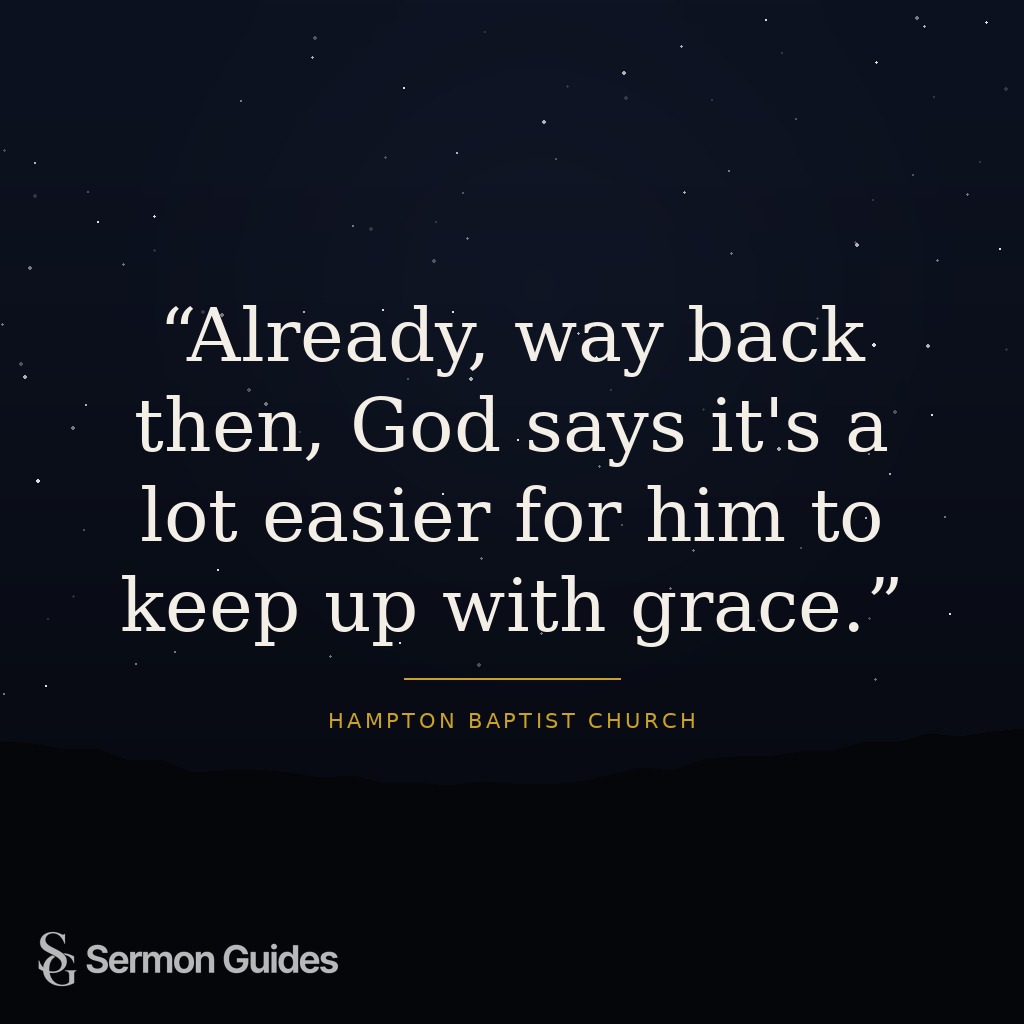
Grace is not an afterthought in God’s story. Look for the ways you can receive and extend grace today. Join us as we reflect on God’s generous love.
#WhenGraceRefusesToBalanceTheBooks #HamptonBaptistChurch #Grace
Post it on Facebook
Then attach the saved picture and paste the caption into a new post.
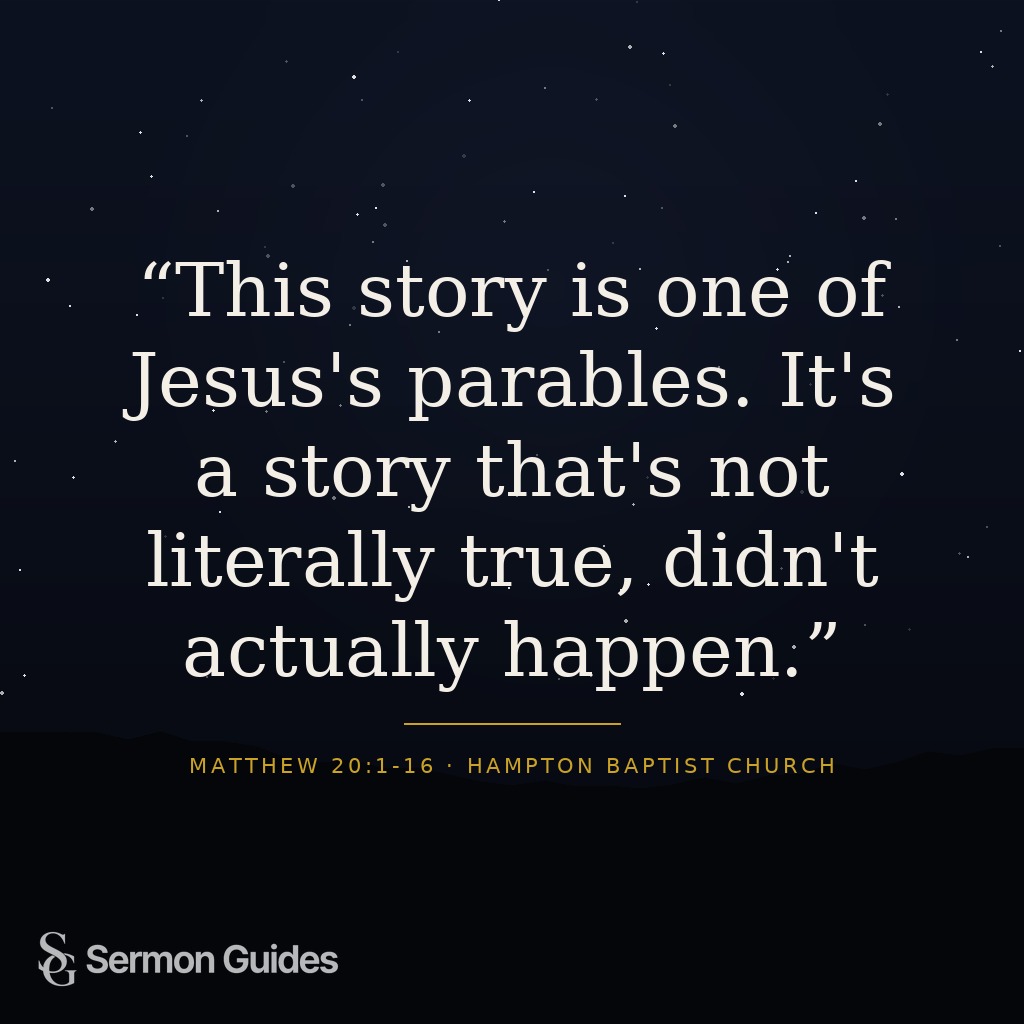
Jesus uses a surprising story to reveal something true about God’s kingdom. Let its unexpected generosity challenge the way you see others. Join us as we explore this parable together.
#WhenGraceRefusesToBalanceTheBooks #HamptonBaptistChurch #Matthew20
Post it on Facebook
Then attach the saved picture and paste the caption into a new post.
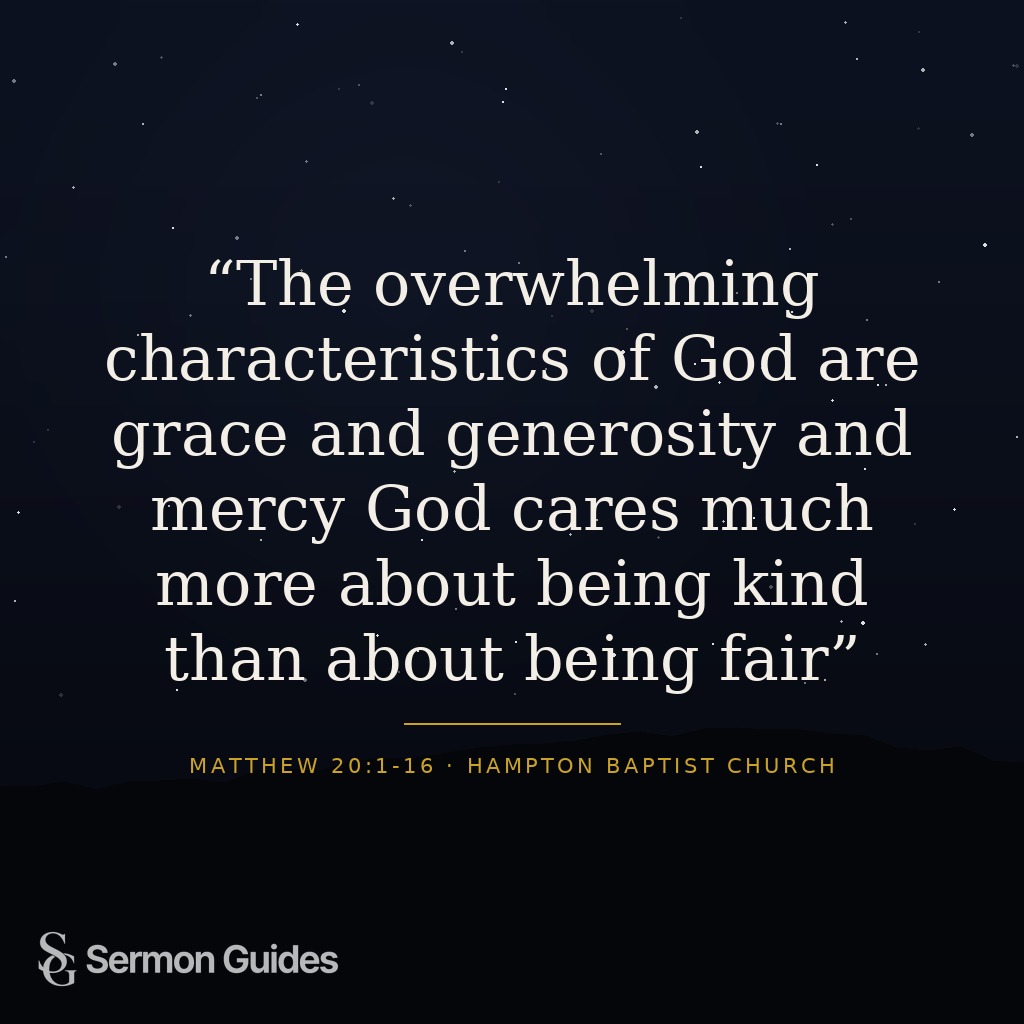
God’s grace can disrupt our ideas of what is fair. Make room today to celebrate goodness for someone else, too. Join us as we learn to live in the abundance of God’s mercy.
#WhenGraceRefusesToBalanceTheBooks #HamptonBaptistChurch #GraceAndMercy
Post it on Facebook
Then attach the saved picture and paste the caption into a new post.

Following God means learning to love grace, even when life doesn’t feel fair. Practice releasing the need to keep score and notice where grace is at work. Join us as we grow in faith together.
#WhenGraceRefusesToBalanceTheBooks #HamptonBaptistChurch #LoveGrace
Post it on Facebook
Then attach the saved picture and paste the caption into a new post.

Grace lets us rejoice when good things happen for others, too. Look for someone else’s joy to encourage this week. Join us as we celebrate the goodness of God together.
#WhenGraceRefusesToBalanceTheBooks #HamptonBaptistChurch #CelebrateGrace
Post it on Facebook
Then attach the saved picture and paste the caption into a new post.
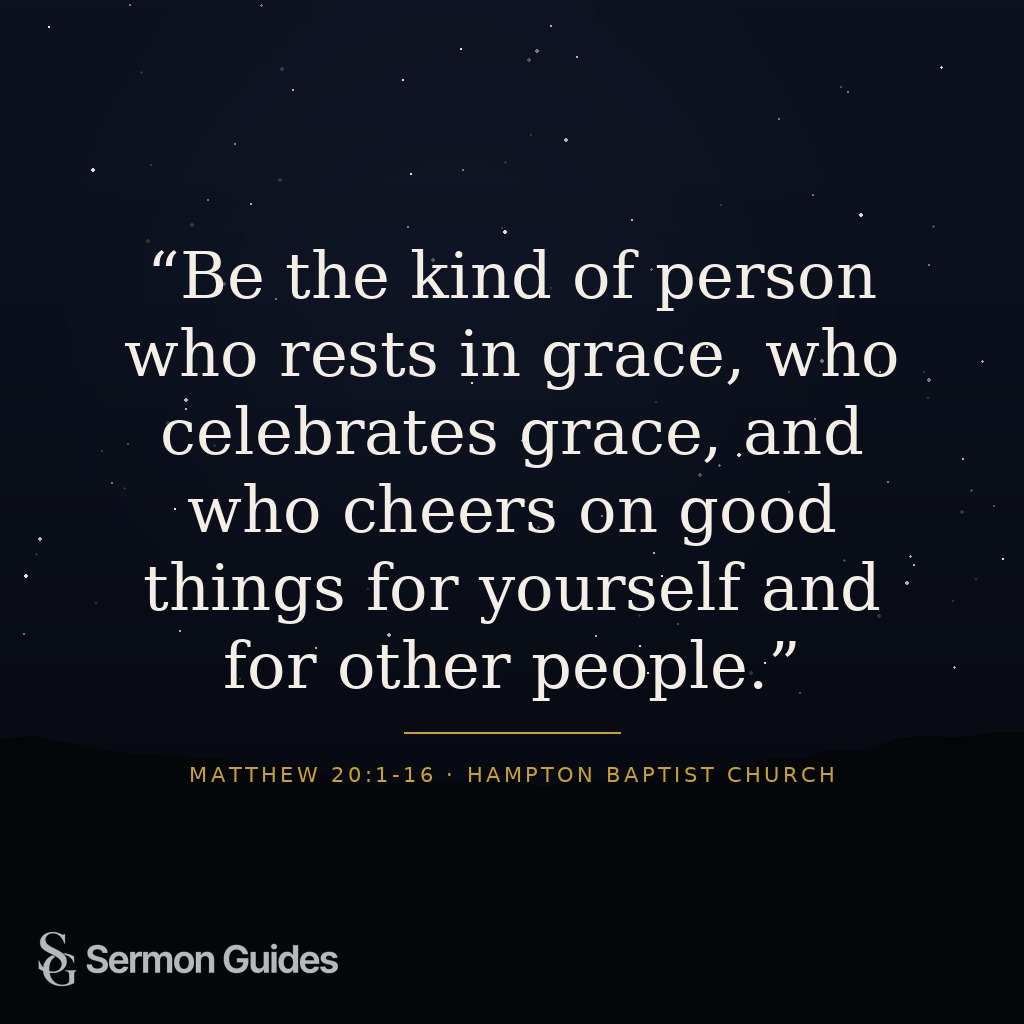
Resting in grace frees us to cheer on others as well as ourselves. Choose one way to encourage someone today. Join us as we follow the path of grace together.
#WhenGraceRefusesToBalanceTheBooks #HamptonBaptistChurch #PathOfGrace
Post it on Facebook
Then attach the saved picture and paste the caption into a new post.