September 20, 2026
The Intercessor We Need
Genesis 18:16-33; Hebrews 12:28-29; Romans 3:26; 1 John 2:1; Hebrews 7:25; Luke 22:31-32
Genesis 18 shows Abraham interceding for Sodom after God reveals what he is about to do. The sermon emphasizes that prayer begins with God’s invitation: God draws Abraham into conversation not because he needs counsel, but to teach him more of God’s character and purposes.
Abraham’s prayer is both bold and reverent. He appeals to God’s justice and mercy, asking whether the righteous will be swept away with the wicked. Prayer is not simply a way to obtain requests; it is a means of knowing God, bringing his promises and character before him, and participating in his work in the world.
The passage ultimately points beyond Abraham to Jesus, the righteous advocate who intercedes for his people. At the cross, God remains just while justifying sinners through Christ. Those who trust in Jesus can pray with confidence, knowing their sin is paid for and their Savior lives to intercede for them.
Key takeaways
- Intercession begins with God’s gracious invitation.
- Prayer teaches us who God is, not merely what he gives.
- Approach God with boldness and reverence.
- Ground your prayers in God’s revealed character.
- Prayer is a real means through which God works.
- Keep praying for people and situations beyond your power to change.
- God’s justice and mercy meet perfectly in Jesus.
- Christ is the righteous advocate of everyone who trusts in him.
- Jesus’ ongoing intercession rests on his finished work.
- Because Christ intercedes for us, we can pray with confidence.
- Day 1Genesis 18:16-21; Romans 8:26-27
Prayer Begins with God
Abraham’s conversation with God begins because God chooses to reveal what He is about to do. Abraham does not force his way into God’s plans; God graciously invites him into the conversation. Prayer is like that. We often think of it chiefly as our effort to get something from God, but Scripture presents prayer as a gift God gives His people—a way to know Him, depend on Him, and take part in His purposes. God is not lacking wisdom or waiting for us to improve His plans. He invites us to pray because He loves us and uses prayer to shape us. Even when an answer is not what we hoped for, prayer is not wasted. As we bring our concerns to the Lord, we learn more of His patience, mercy, holiness, and care. Today, come honestly before God, trusting that His invitation is already open.
- Reflect
- How might prayer be forming your understanding of God, even when circumstances do not change?
- Prayer
- Father, thank You for inviting me to come to You; teach me to know and trust You as I pray.
- Day 2Genesis 18:23-27; Hebrews 12:28-29
Boldness with Reverence
Abraham speaks boldly, asking whether God will spare the city, yet he never forgets who he is speaking to: “I am but dust and ashes.” His example holds together two truths we can be tempted to separate. God welcomes our honest requests, and God is holy beyond our full comprehension. Reverence does not mean we must hide our needs or speak in polished phrases. It means we approach God with humility, remembering that we are creatures and He is the Creator. For those who belong to Christ, this holy God is also our Father, who has drawn us near by grace. We do not come because we deserve an audience, but because God has opened the way. Let wonder and confidence live together in your prayers: bring what weighs on you, and bring it to the Lord with awe, gratitude, and trust.
- Reflect
- What would change in your prayers if you held together confidence in God’s welcome and reverence for His holiness?
- Prayer
- Holy Father, help me come honestly and boldly, with the humility and awe You deserve.
- Day 3Genesis 18:23-25; Romans 3:23-26
Appeal to God’s Character
Abraham’s plea rests on what he knows about God: the Judge of all the earth will do what is right. He does not ask God to abandon justice; he brings his difficulty to God and appeals to His righteous character. We, too, can pray from what God has revealed about Himself. When we cannot understand how mercy and justice meet, we need not pretend the questions are easy. We can bring them to the Lord, who is both perfectly just and rich in mercy. The cross gives the clearest answer: Jesus bore the judgment sin deserves, so God can justify those who trust in Him without ceasing to be just. Knowing God’s character gives shape to our prayers. Scripture teaches us what to ask, what to hope for, and whom we are addressing. Make room today to read God’s Word, then let what it reveals guide your prayers.
- Reflect
- Which truth about God’s character can guide a concern you are bringing to Him today?
- Prayer
- Righteous and merciful God, teach me Your character through Your Word and shape my prayers by what is true.
- Day 4Genesis 18:26-33; James 5:16-18
Keep Asking
Abraham keeps speaking, and God keeps answering. The exchange reminds us that prayer is not imaginary or pointless: God appoints the prayers of His people as one means through which He works. That does not make prayer a way to control God or guarantee the outcome we prefer. Abraham’s request did not prevent Sodom’s judgment. But his persistence shows that we may bring our burdens repeatedly to the Lord, trusting His wisdom and power. We may pray for a loved one, a strained relationship, a church in need, or healing, without knowing what God will do. Our limits are real; we cannot change hearts or carry every burden ourselves. God is able, and He calls us to ask. Keep praying with hope, while leaving the answer in His hands. Faithful prayer is not a refusal to face reality; it is dependence on the God who rules over it.
- Reflect
- What person or situation have you stopped bringing to God, and what might it look like to pray again?
- Prayer
- Lord, give me perseverance in prayer and help me trust Your wisdom with every answer.
- Day 51 John 2:1-2; Hebrews 7:25
Jesus, Our Advocate
Abraham’s intercession points beyond itself to our greater need: not only for someone to pray on our behalf, but for someone to stand in our place. The good news is that Jesus is our advocate with the Father. He does not disguise our sin or make a weak case appear strong. He gave Himself for sinners, and His finished work is the ground of our forgiveness. Now He lives to intercede for those who come to God through Him. His presence is not a sign that our debt remains unpaid, but a sure reminder that He has paid it. When guilt or fear makes prayer difficult, remember that you do not approach God by presenting your own goodness. You come through Christ, the righteous One. Rest in His faithful intercession, and let that assurance draw you into prayer—not carelessness, but gratitude and confidence in the Savior who holds you fast.
- Reflect
- How does Jesus’ ongoing intercession change the way you approach God with your failures and fears?
- Prayer
- Jesus, thank You for standing as my advocate; help me rest in Your finished work and come confidently to the Father.
Open together
- 1.When have you asked someone to speak on your behalf or pray for you?
- 2.What helps you feel comfortable sharing a concern with someone who will pray for you?
Observation
- 1.Who tells Abraham about the outcry against Sodom and Gomorrah, and what does the Lord say He will do?
- 2.What does Abraham ask the Lord to consider about the righteous and the wicked in the city?
- 3.How does Abraham describe himself as he speaks with the Lord?
- 4.What numbers does Abraham propose, and how does the Lord respond to each request?
- 5.According to the passage, why does the Lord choose to share His purposes with Abraham?
Interpretation
- 1.What do Abraham’s repeated requests reveal about both his concern for the people and his relationship with God?
- 2.How does Abraham appeal to God’s justice and character in verses 23–25?
- 3.What does this passage teach about approaching God with both boldness and humility?
- 4.How might prayer shape a person’s understanding of God, even when the outcome is not what they asked for?
- 5.How does the sermon connect Abraham’s intercession with Jesus’ continuing advocacy for believers?
- 6.In what sense can prayer be part of God’s purposes without controlling or changing God?
Application
- 1.Who could you faithfully pray for this week, especially someone facing a difficult situation?
- 2.What aspect of God’s character could you reflect on before bringing your requests to Him?
- 3.Is there a prayer you have become discouraged about? What would it look like to keep bringing it to God with trust?
- 4.How might reverence and humility shape the way you pray or worship?
- 5.How does remembering that Jesus intercedes for believers encourage you when you feel guilty or inadequate?
- 6.What is one practical way your group can support one another through prayer?
Jesus Prays for You
0:59When Peter was about to fail, Jesus told him, “I have prayed for you”—and that same hope still matters.
When God Doesn’t Say Yes
0:57An unanswered prayer may be an invitation to discover how deeply God has resourced you for what you face.
How Can God Be Just and Merciful?
0:58Abraham’s prayer wrestles with a question at the heart of faith: how can God judge sin and show mercy?
You Can’t Do It—But God Can
0:46You can’t save, heal, or mend everything on your own—so pray to the God who can.
God Doesn’t Owe You an Audience
0:50Reverence doesn’t push you away from God—it helps you understand the awe of being welcomed into his presence.
Remember Who You’re Praying To
0:55Prayer changes when you stop treating God like a bigger version of yourself and remember who he is.
Why Prayer Matters
0:41Prayer isn’t a way to unlock God’s power—it’s how God has chosen to do his work in the world.
Boldness With Reverence
0:48Abraham’s example shows that you can ask God boldly without approaching him casually.
Learn Theology to Pray Better
0:40The more you learn about God’s character, the more you’ll know what to say when you pray.
Prayer Is More Than Getting Answers
0:44If prayer is only about getting what you ask for, you’re missing what prayer can teach you about your relationship with God.
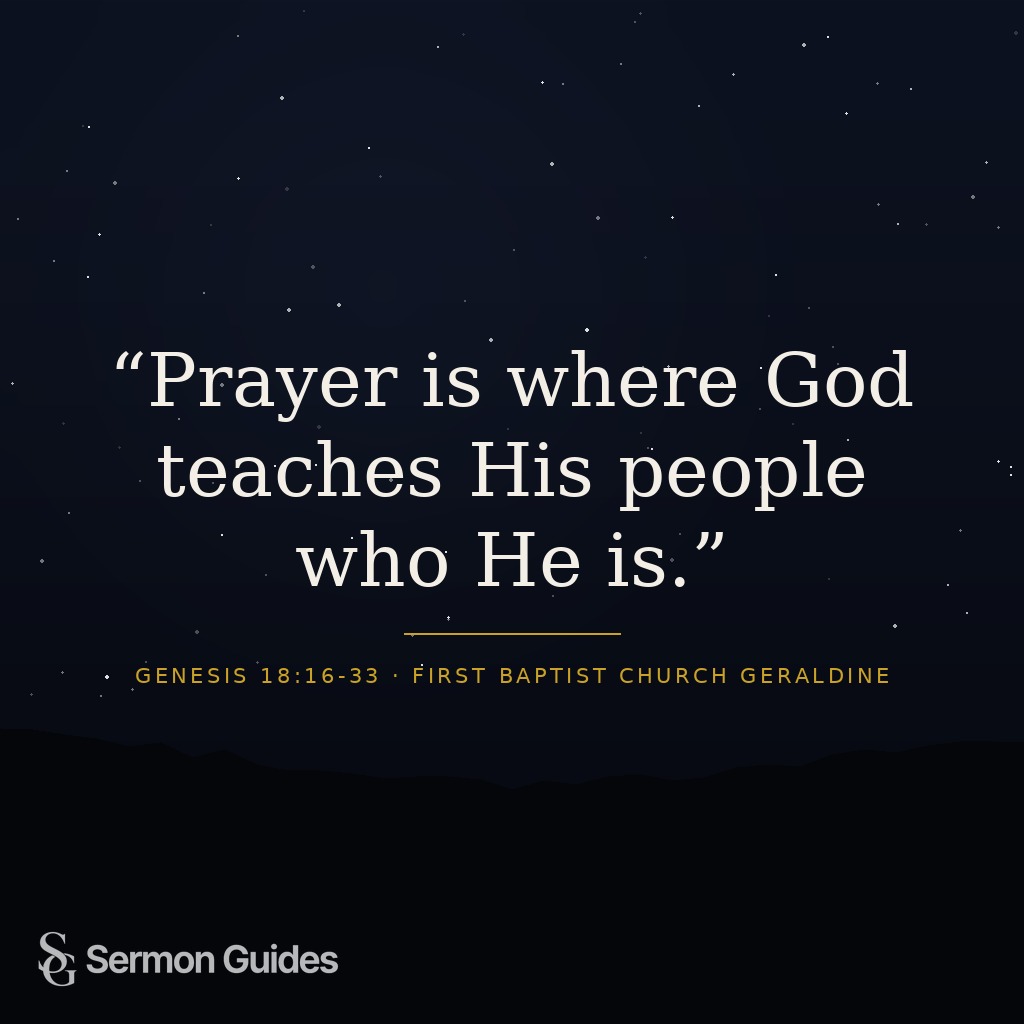
Prayer is more than bringing requests; it is a place where we learn the heart of God. Make time this week to pray with His Word open. What might God teach you as you come to Him?
#TheIntercessorWeNeed #FirstBaptistGeraldine #Prayer #KnowGod
Post it on Facebook
Then attach the saved picture and paste the caption into a new post.

Prayer invites both boldness and reverence: we bring big requests to the holy God who hears us. Bring your needs honestly before Him, with humility and trust. What bold prayer will you bring to God today?
#TheIntercessorWeNeed #FirstBaptistGeraldine #Prayer #Worship
Post it on Facebook
Then attach the saved picture and paste the caption into a new post.
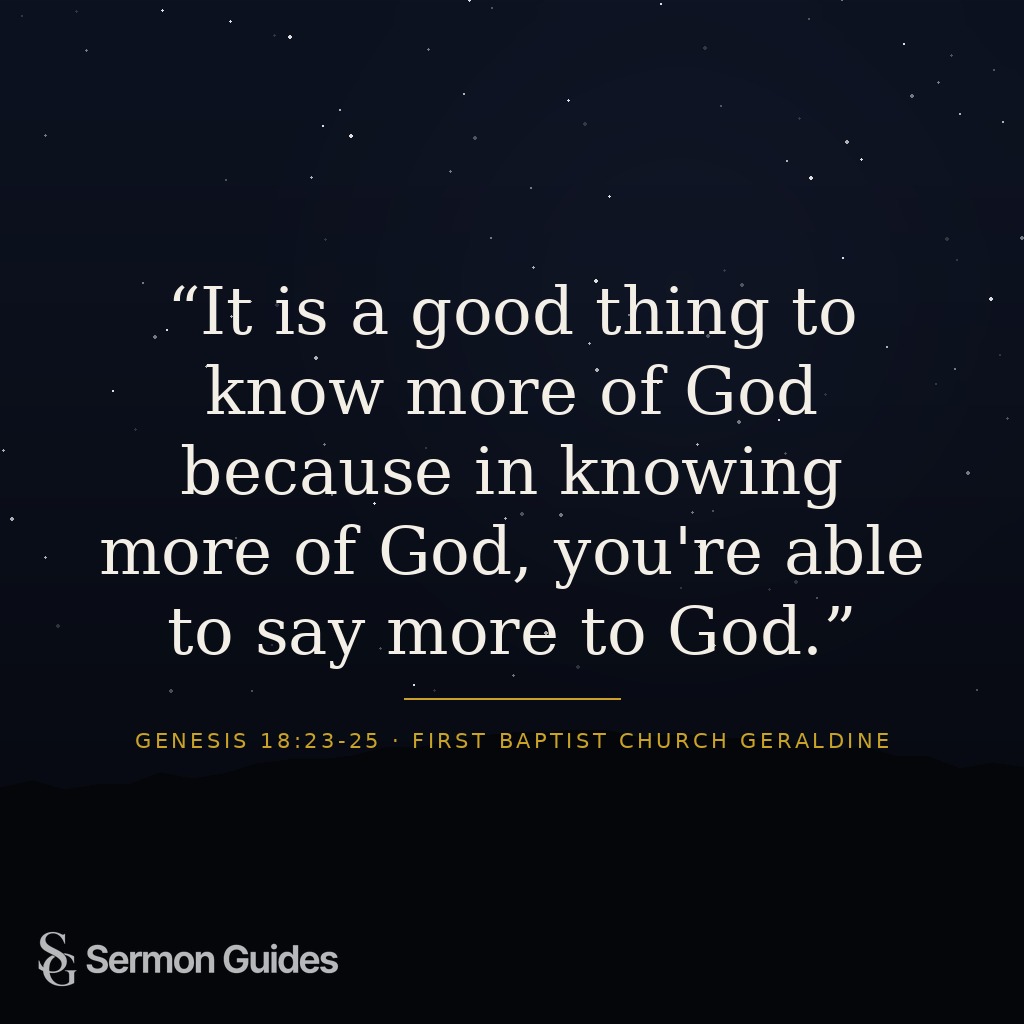
Knowing God through His Word gives shape and depth to our prayers. Spend time this week learning what He says about Himself, then bring those truths back to Him in prayer. Join us as we grow in knowing and trusting God.
#TheIntercessorWeNeed #FirstBaptistGeraldine #Bible #Prayer
Post it on Facebook
Then attach the saved picture and paste the caption into a new post.
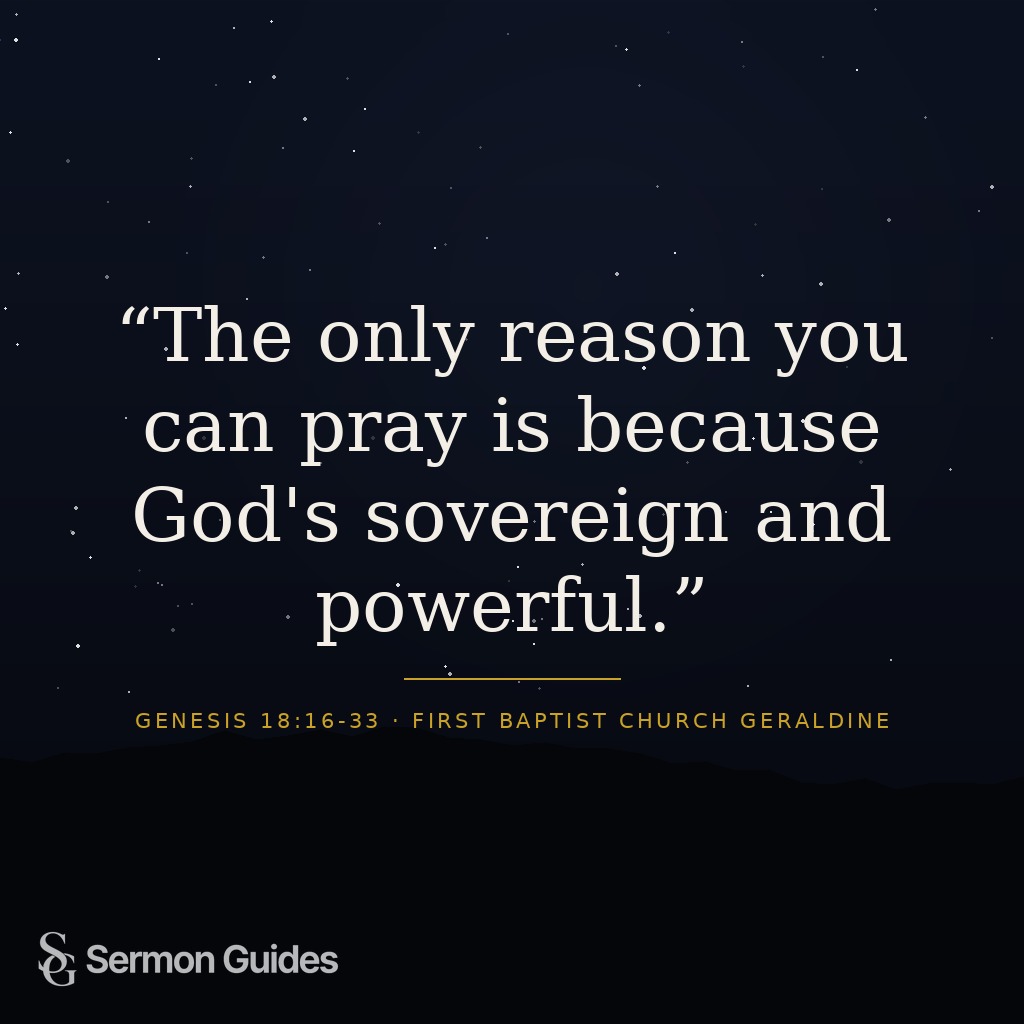
We pray because God is sovereign and powerful—not because we can control the outcome. Keep bringing your burdens to the One who is able to act. What do you need to entrust to Him today?
#TheIntercessorWeNeed #FirstBaptistGeraldine #Prayer #TrustGod
Post it on Facebook
Then attach the saved picture and paste the caption into a new post.
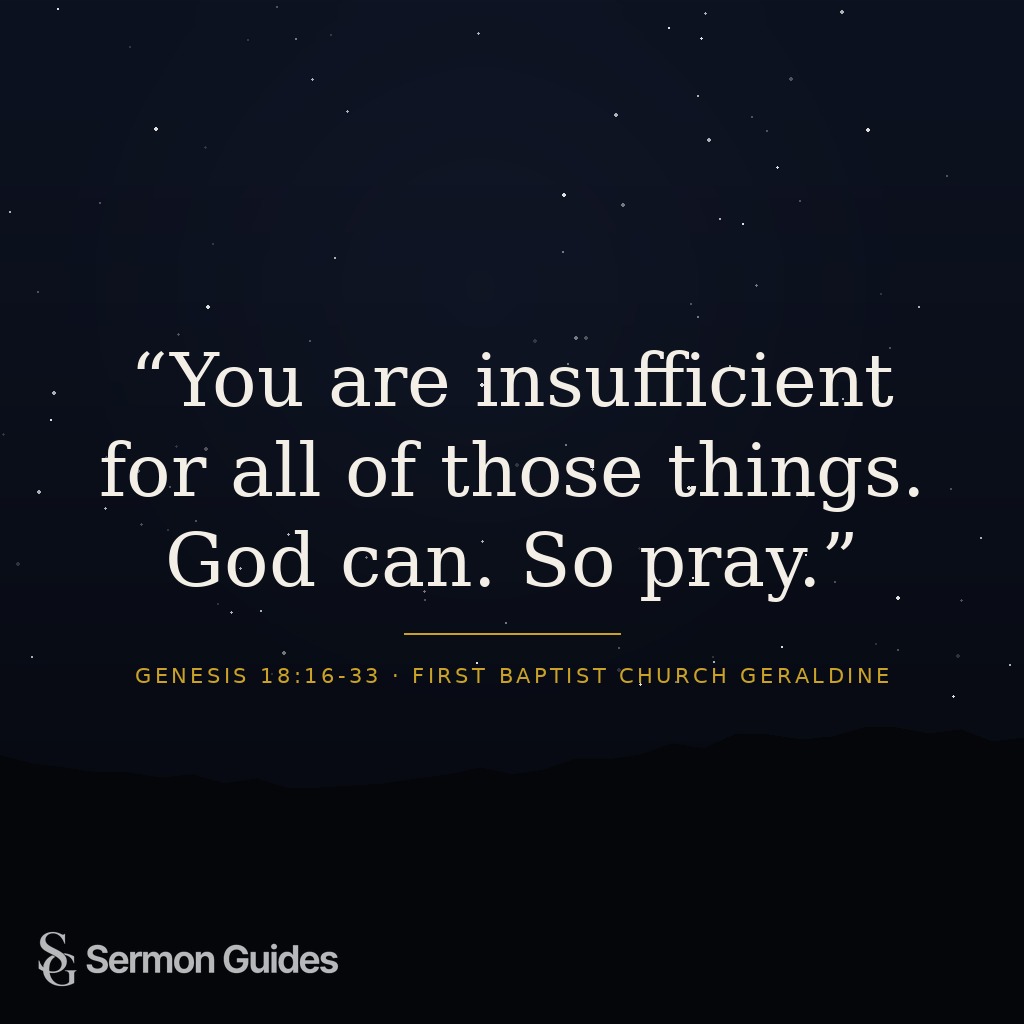
Some burdens are beyond what we can fix, but they are never beyond God's power. Bring Him the people and situations weighing on your heart, and keep praying. Who can you pray for today?
#TheIntercessorWeNeed #FirstBaptistGeraldine #Pray #Hope
Post it on Facebook
Then attach the saved picture and paste the caption into a new post.
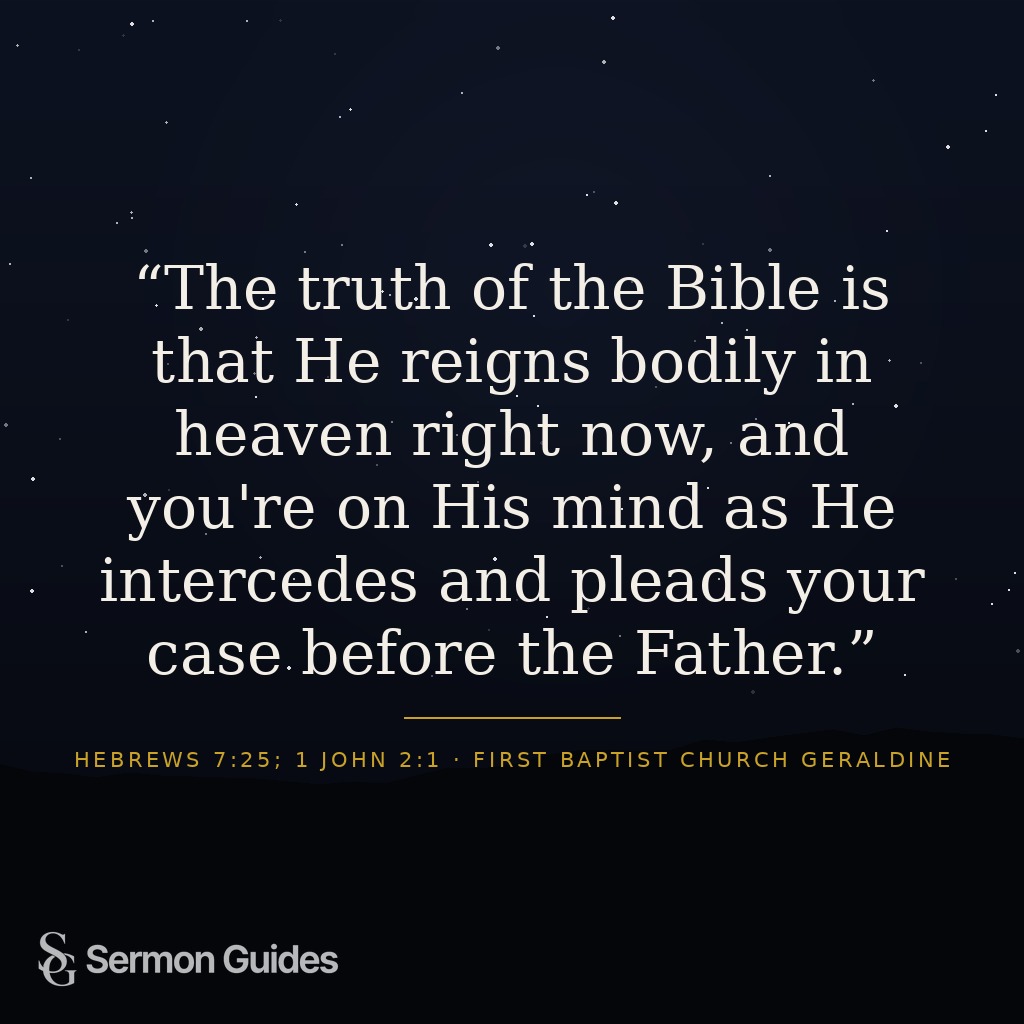
Jesus is not distant or indifferent: He intercedes for His people before the Father. If you belong to Christ, take heart in His faithful care and finished work. Come hear more about the hope we have in Jesus.
#TheIntercessorWeNeed #FirstBaptistGeraldine #Jesus #Gospel
Post it on Facebook
Then attach the saved picture and paste the caption into a new post.