
A Taste for the Word of God
Sep 20, 2026 · Sunday AM · Revelation 10:1-11; Ezekiel 3:1-3
Rooted in Ezekiel 3 and Revelation 10, the message challenges the congregation to cultivate an enduring appetite for the whole counsel of God. Reflecting on how childhood palates mature from desiring only sweets to appreciating bitter yet nourishing vegetables, the sermon emphasizes that spiritual maturity requires ingesting both the comforts and the convictions of Scripture. Believers cannot merely admire God's Word from a distance or treat it like an ornamental meal; it must be eaten, digested, and internalized.
Drawing upon the prophetic imagery of John and Ezekiel eating the scroll, the preaching underscores that God's truth is sweet to the taste yet can become bitter in the stomach. While the promises of God bring immediate joy and assurance, the reality of living out truth in a fallen world involves confrontation, discipline, and suffering. Faithfulness demands receiving God's Word even when it reproves sin, exposes weakness, or requires difficult obedience in hostile circumstances.
The message also reminds the body of Christ that genuine proclamation begins with personal reception. Before Ezekiel or John could prophesy, they had to take the message into their own hearts. In the same way, the church cannot teach what it refuses to study or summon others to obey what it neglects. The call concludes with an invitation to wholehearted obedience through Christ, reminding the saints that whatever bitter trials come, God's sovereign truth secures ultimate victory.
Key takeaways
- Spiritual maturity means developing a hunger for all of God's Word, not just the parts that bring comfort.
- God's truth cannot merely be admired from the outside; it must be received, digested, and internalized.
- We cannot faithfully teach or proclaim what we refuse to study and obey for ourselves.
- The Word of God is sweet to receive, but living it out often brings bitter challenges and convictions.
- Scripture must be allowed to confront and correct us, not just soothe us.
- Prophets and teachers must let the message transform their own hearts before delivering it to others.
- Difficult seasons and earthly suffering do not mean evil wins; God's sovereignty has the final say.
- Like Jeremiah, believers must let God's truth burn within them even when circumstances are discouraging.
- Obedience to God's plan of salvation requires humble submission rather than personal preference.
- A faithful congregation stands together in prayer, mutual love, and shared service to the Lord.
Day 1
Eating the Word
Ezekiel 3:1-3; Revelation 10:9-10
When God commissioned Ezekiel and the apostle John, He gave them both a remarkable instruction: take the scroll and eat it. Food placed on a plate may look attractive, but it cannot nourish our bodies until we actually take it in and digest it. In the same way, the Word of God cannot be kept at a polite distance. It is not enough to admire the Bible on a shelf, carry it to church, or nod along with scripture on Sunday morning. God desires His truth to get down into our innermost being. Digesting scripture requires intentionality, patience, and humility. It means opening our hearts in quietness, allowing God's voice to challenge our habits and reshape our thinking. Before we can ever live out God's wisdom or speak it to those around us, we must first receive it personally. We must let His holy truth become our daily nourishment and the deep anchor of our souls.
- Reflect
- In what practical ways can you move beyond merely admiring God's Word to truly digesting it in your daily life?
- Prayer
- Lord, give me a spiritual hunger to receive, digest, and live by Your holy Word today.
Day 2
Sweet Truth and Necessary Bitter
Psalm 119:103; Hebrews 4:12
John noted that the scroll tasted sweet as honey in his mouth, but turned bitter in his stomach. God's truth brings profound joy, hope, and consolation, yet it also carries the weight of correction and righteous conviction. We naturally welcome scriptures that promise peace, favor, and comfort in our trials. But what happens when the same Word confronts our secret sins, questions our stubborn attitudes, or calls us to repent? Mature faith learns to welcome both the sweet promises and the bitter remedies of God. Just as a loving parent serves nourishing meals that a child might not initially enjoy, our Heavenly Father knows what will truly heal and sustain us. Bitterness enters when we realize that following Jesus costs us our pride and self-reliance. Embracing the full counsel of God means letting His truth search our motives and conform us to the likeness of Jesus Christ.
- Reflect
- How do you respond when the Bible challenges your habits rather than simply comforting your feelings?
- Prayer
- Father, grant me the humility to welcome Your loving correction as readily as I receive Your comforting grace.
Day 3
God Has the Final Word
Revelation 10:1-6; Romans 8:37-39
The visions of Revelation remind God's suffering people that the trials of this present world are neither permanent nor sovereign. An angel stands firmly upon the sea and the land, declaring God's eternal authority over all creation. In life, we face severe difficulties: beloved family members fall ill, financial security collapses, and personal relationships suffer heartbreak. It can feel as though wickedness and grief have gained the upper hand. Yet John's message assures believers that evil will not have the last word. God has set an immovable boundary around the powers of darkness. Even when the clouds gather and the journey grows steep, we hold to an unshakable assurance: the Lord has already secured final victory through the blood of Christ. Whenever you feel overwhelmed by the hardships around you, turn back to the promises of scripture and remember who holds eternity in His hands.
- Reflect
- What present sorrow or worry do you need to entrust to the eternal victory of God today?
- Prayer
- Sovereign Lord, help me look beyond present trials and anchor my heart in Your promised triumph.
Day 4
Fire in the Bones
Jeremiah 15:16; Jeremiah 20:9
The prophet Jeremiah endured deep loneliness and relentless opposition as he proclaimed God's message to a rebellious nation. There were moments when Jeremiah felt isolated, misunderstood, and tempted to give up preaching altogether. Yet he discovered that when God's Word has been thoroughly internalized, it acts like a burning fire shut up in the bones that cannot be contained. Standing for spiritual truth is rarely popular. Walking in holiness often requires us to stand firm when cultural trends and public opinion move in the opposite direction. There will be seasons when doing what is right feels lonely, but God never abandons His faithful servants. When weary, we can lean on the strength of our Savior and the encouragement of our church family. God calls us to steadfast perseverance, trusting that our labor in the Lord is never in vain.
- Reflect
- Where in your life do you feel weary, and how can God's Word reignite your commitment to keep going?
- Prayer
- Dear God, rekindle Your holy fire within my soul and give me endurance to remain faithful.
Day 5
A Family That Cares and Serves
Galatians 3:26-28; 1 Corinthians 12:25-27
God never intended for His people to walk the Christian pathway in isolation. The church gathered in worship is not an audience watching a performance, but a living spiritual family bound together in Christ. Through faith, repentance, and baptism, we are united into one body where each member matters deeply to the Lord and to each other. When one person suffers with illness, grieves a sudden loss, or seeks forgiveness, the community gathers closely in prayer to bear that burden together. Likewise, every brother and sister is invited to serve with willing hearts, whether in welcoming visitors, leading worship, or helping behind the scenes. Faithful service does not come from legalistic compulsion or mere routine; it flows from genuine gratitude for the cross. As we share each other's loads, our collective love testifies to the world that we belong to Jesus Christ.
- Reflect
- Who in your church community can you surround with prayer, practical care, or willing service this week?
- Prayer
- Lord Jesus, teach me to love Your church family genuinely and serve my brothers and sisters with a willing spirit.
Open together
- 1.What is a food you strongly disliked as a child but eventually grew to appreciate as an adult?
- 2.When you open your Bible, what kinds of passages or themes do you naturally find easiest and most comforting to read?
- 3.Can you think of a time when hearing the honest truth was uncomfortable at first, but proved to be exactly what you needed?
Observation
- 1.According to Revelation 10:1-2, how is the mighty angel described, and what object did he hold open in his hand?
- 2.What command did the voice from heaven and the angel give to John concerning the little scroll (Revelation 10:8-9)?
- 3.How did the angel say the scroll would affect John, and what did John actually experience when he ate it (Revelation 10:9-10)?
- 4.What assignment was given to John immediately after he swallowed the scroll (Revelation 10:11)?
- 5.In Ezekiel 3:1-3, which the sermon connects to Revelation 10, what was the prophet told to do with the scroll before going to speak to the house of Israel?
Interpretation
- 1.Why do both Ezekiel and John receive the instruction to 'eat' the scroll rather than simply read, hold, or memorize it?
- 2.What does it mean biblically for God's Word to taste 'sweet as honey' in the mouth yet become 'bitter' in the stomach?
- 3.Why must a servant of God fully internalize and digest God's truth before attempting to proclaim or teach it to others?
- 4.How does the reality of God's coming judgment make the gospel message both deeply comforting to the believer and sobering to live out in a broken world?
- 5.What does Jeremiah's experience of eating God's Word yet facing rejection teach us about remaining faithful when obedience does not bring immediate popularity or visible success?
Application
- 1.In what areas of your life do you currently find God's Word harder to accept or 'swallow,' and why?
- 2.What practical adjustments can you make in your daily routine to ensure you are thoroughly digesting Scripture rather than merely admiring or skimming it?
- 3.How do you usually react when Scripture confronts your behavior or attitudes, and how can you cultivate a heart that welcomes holy correction?
- 4.Is there a situation where God is calling you to stand on truth and share it lovingly, even though the message might be uncomfortable or costly?
- 5.How can our group better support and pray for one another during seasons when living out God's calling feels heavy or bitter?
When God Gives You His Number
0:49We get butterflies when a crush gives us their phone number, but ignore God when He speaks.
Moonwalk On God's Word
0:58You know all the soap opera drama by heart, but can you quote what Peter or Paul said?
Your Bible Ought to Be Worn Out
0:44A pristine Bible sitting pretty on your shelf cannot transform your life.
When God's Word Corrects You
0:56It is easy to welcome God's word when it brings comfort, but what happens when it corrects you?
Why Good People Still Suffer
0:56Doing the right thing does not exempt you from heartbreak, sickness, or betrayal.
Taking A Stand Will Cost You
0:45The moment you choose purity and integrity, compromise will start throwing rocks.
Stop Putting God On The Back Burner
0:50We claim to seek God's kingdom first, but our daily schedule shows who really comes first.
Fire In Your Bones
0:47When nobody listens and you want to give up, God's calling becomes like fire in your bones.
Are You Starving Spiritually?
0:59Just like your body weakens when you skip meals, your spirit starves without daily Scripture.
Old School Table Manners
0:54Basic dinner etiquette is disappearing, especially keeping our phones off the table.
Spiritual growth changes our appetite for the things of God. When we mature in faith, we find ourselves hungering for Scripture rather than the distractions of this world. Join us this Sunday at Arlington Road as we study the Word together! 🙏
#ATasteForTheWordOfGod #ArlingtonRoadChurchOfChrist #SpiritualGrowth #BibleStudy
Post it on Facebook
Then attach the saved picture and paste the caption into a new post.
Before we can share God's message with others, we must first allow it to take root in our own hearts. Effective discipleship begins with personal humility and dedicated time in Scripture. Come grow alongside our church family in Bible study this week.
#ATasteForTheWordOfGod #ArlingtonRoadChurchOfChrist #Discipleship #InternalizeTheWord
Post it on Facebook
Then attach the saved picture and paste the caption into a new post.
Admiring the Bible on a shelf will never sustain our spiritual life. God calls us to consume His Word daily so that it can truly strengthen and guide us through every season. We invite you to join our fellowship this Sunday as we feed on God's truth.
#ATasteForTheWordOfGod #ArlingtonRoadChurchOfChrist #DailyBread #ScriptureNourishment
Post it on Facebook
Then attach the saved picture and paste the caption into a new post.

Hard seasons and unexpected trials will test every one of us, but evil never gets the final word. When life feels overwhelming, anchor your mind in the promises and peace found only in Scripture. If you need prayer or encouragement, reach out to our church family today.
#ATasteForTheWordOfGod #ArlingtonRoadChurchOfChrist #HopeInChrist #ReadYourBible
Post it on Facebook
Then attach the saved picture and paste the caption into a new post.
When God's truth lives deep inside of you, keeping quiet is simply not an option. Even when standing for truth feels lonely, God provides the endurance we need to stay faithful. Come be encouraged by a loving community of believers this Sunday morning.
#ATasteForTheWordOfGod #ArlingtonRoadChurchOfChrist #FireInMyBones #FaithfulPreaching
Post it on Facebook
Then attach the saved picture and paste the caption into a new post.
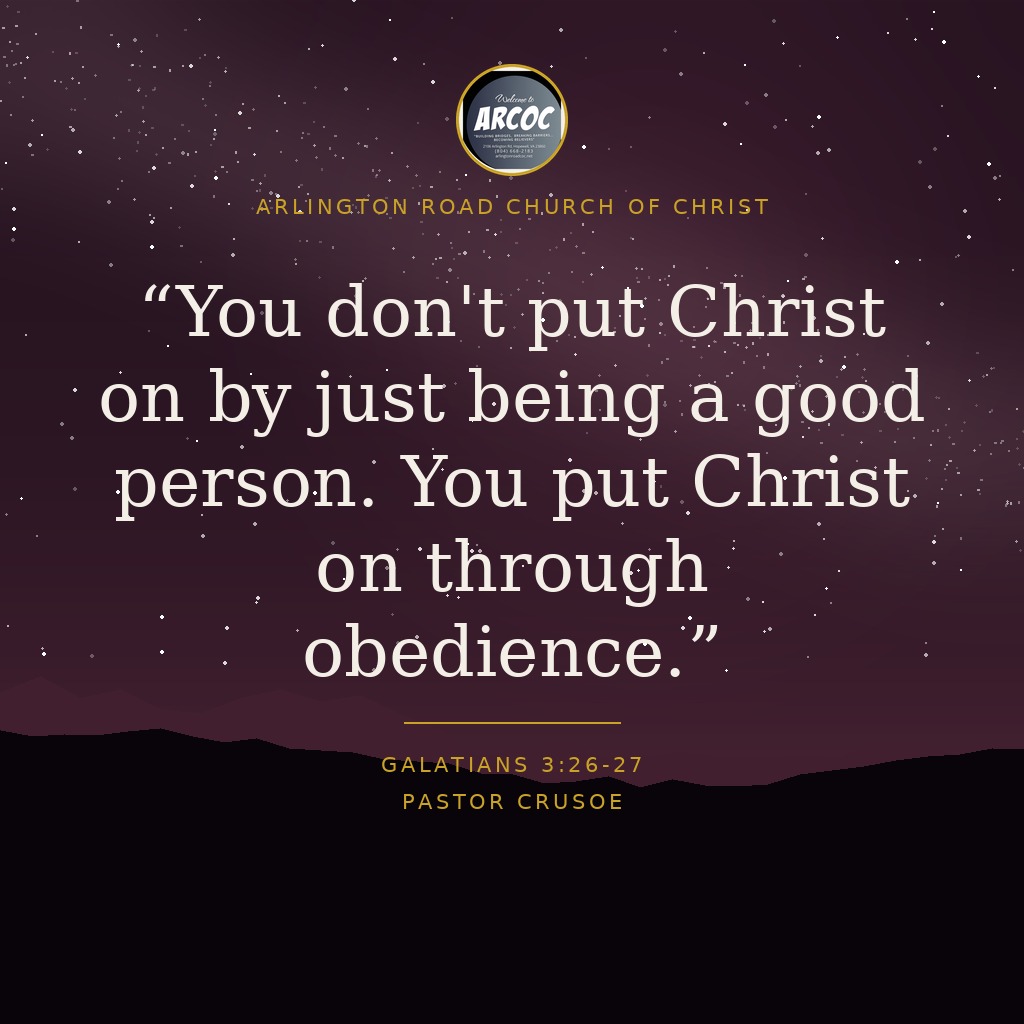
Salvation is not rooted in self-righteousness, but in trusting obedience to God's divine plan. We put on Christ when we surrender our will to His through faith and baptism into His body. If you are ready to take that next step in your spiritual journey, message us today.
#ATasteForTheWordOfGod #ArlingtonRoadChurchOfChrist #Galatians3 #ObedienceToChrist
Post it on Facebook
Then attach the saved picture and paste the caption into a new post.